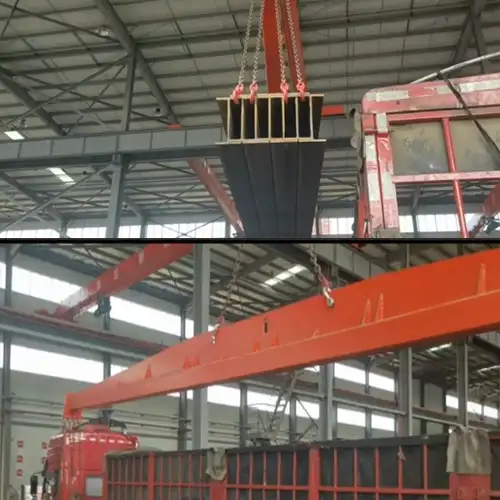
How to Choose Overhead Cranes & Spreader for 12-Meter Steel Beams
Learn how to safely lift 12-meter steel beams with the right cranes, slings, clamps, and accessories. Expert tips for workshops, construction, and storage.
| Crane Type | Overhead/EOT crane for 12 m steel beam handling, double-girder for heavier loads; electric wire rope hoist/open winch; customized spreader beam for controlled multi-point lifting; ISO A5–A8 / FEM 2M–5M for frequent/heavy-duty uses; 380/400/415v50hz3ph. |
| Crane Capacity | 10–50 ton; final rated capacity is determined by the maximum beam weight plus the spreader beam and lifting accessories. |
| Span Length | 10–30 m span; customized according to the workshop or storage-bay dimensions and required beam handling coverage. |
| Lifting Height | 6–15 m; customized according to beam stacking height, building clearance, and required lifting path. |
| Coverage Area Type | Rectangular crane-bay coverage; steel fabrication workshops, beam storage areas, assembly stations, production lines, warehouses, loading zones, and designated steel handling areas. |
| Application | Lifting and transporting 12 m steel beams, H-beams, I-beams, structural steel, fabricated sections, and long steel components in fabrication shops, steel plants, warehouses, and construction-material yards. |
| Certifications | CE / ISO / SGS / Other third-party inspection |
| Customization | Customized according to the 12 m beam length, beam weight, center of gravity, lifting points, and handling process; double-girder overhead/EOT crane, wire rope hoist or open winch, pendant/radio/cabin control, and fixed or adjustable spreader beam |
Crane Manufacturer: Yuantai Cranes – 30+ Years Professional Crane Manufacturer from China
Category: Featured
Tags:
Your Trusted Overhead Crane Manufacturer & Supplier
12-Meter Steel Beams Handling Overhead Crane Solution
How to Choose the Right Overhead Crane and Spreader for Lifting Long Steel Beams
Introduction
Lifting a 12-meter steel beam is not a simple job. These beams are long, heavy, and difficult to handle without proper equipment. Even a small mistake can lead to material damage, costly delays, or worse, safety incidents on site. That's why selecting the right crane and accessories is essential for anyone working with long steel beams.
These beams are commonly found in steel fabrication workshops, construction sites, warehouses, and shipyards. In each of these settings, the handling challenges can differ:
- Workshops: Beams are moved for cutting, welding, or assembly. Tight spaces and precise placement make crane choice critical.
- Construction sites: Beams often need to be lifted from storage to installation points. They may require temporary supports or mobile cranes for safe movement.
- Warehouses: Beams are stored or loaded for shipping. Proper lifting methods prevent scratches, bending, or twisting during stacking.
- Shipyards and industrial sites: Long beams may need to be lifted into frameworks or elevated positions. Multiple cranes or spreaders are often necessary to keep the beam level.
This guide focuses on practical, real-world scenarios. It shows how to plan lifts, choose cranes, and select accessories in a way that keeps your team safe and your steel beams intact. By understanding the load, the work environment, and proper lifting techniques, you can prevent accidents, reduce downtime, and make handling 12-meter beams more predictable and efficient.
- Key factors to consider include beam weight, length, center of gravity, and lifting points.
- Using the right crane type and accessories can prevent beam sagging or rotation during the lift.
- Safety, efficiency, and minimizing material damage should always guide every lifting decision.
Handling Requirement of 12-Meter Beam
Handling a 12-meter steel beam safely starts with understanding its weight, shape, and material properties. These factors directly influence which crane, accessories, and lifting methods you should use. Misjudging any of them can cause beam bending, twisting, or even accidents on site.
Weight and Profile
The weight of a 12-meter steel beam depends on its profile and steel grade.
- I-beams, H-beams, and channels in this length usually weigh between 1–4 tons. The exact weight depends on thickness, flange width, and material density.
- The center of gravity is crucial. Lifting from the wrong points can cause the beam to bend or twist. For long beams, even a small misbalance can place high stress on the crane and lifting accessories.
- Always consider a safety margin of 20–25% on top of the beam's calculated weight. This ensures the crane and slings aren't overloaded during lifting.
Practical Tip: For beams over 10 meters, two-point or multi-point lifting is generally safer than lifting from the center only. It reduces sagging and prevents damage to both the beam and crane.
Material Considerations
The type of steel and its condition affects how the beam should be handled:
- Hot-rolled steel: Often heavier and slightly more flexible due to residual heat. May require careful handling to prevent bending or warping during transport.
- Cold-rolled steel: Usually smoother and more rigid, but can be more prone to scratching. Protective slings or clamps are recommended.
- Surface condition: Rust, mill scale, or paint coatings can affect gripping. Using padded or rubber-protected slings helps prevent dents or scratches.
Practical Tip: Inspect the beam before lifting. Check for visible defects, bends, or surface irregularities. Using protective slings or clamps can extend beam life and prevent costly material damage.
Typical Applications
12-meter steel beams are long and heavy, which makes handling them a challenge in every setting. How and when you lift them depends on the environment, available equipment, and the specific task. Understanding these scenarios helps you choose the right crane and accessories for safe, efficient operations.
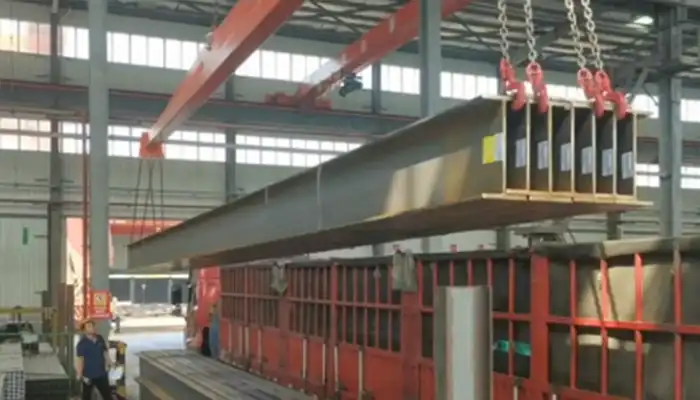
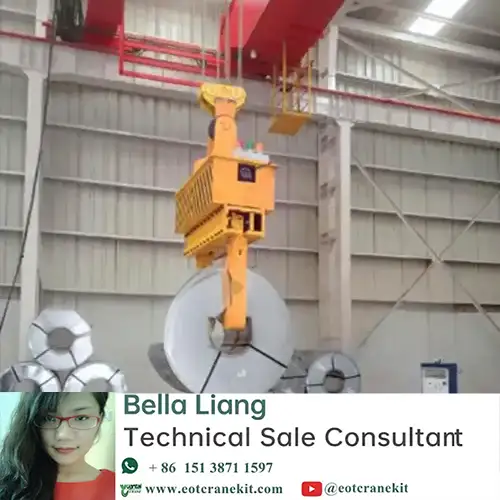
overhead crane with tailored spreader for long steel beam handling, 12 meter spreader
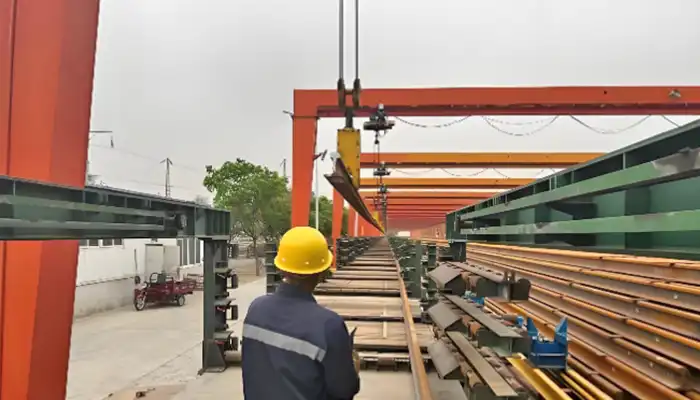
Multiple gantry crane for long steel beam handling
Workshop Fabrication
In steel workshops, 12-meter beams are often stored, cut, welded, or assembled before being sent to construction sites or installed in frames.
- Beams are typically lifted vertically with crane trolleys for short moves or horizontally using two-point lifts when precise placement is needed.
- Space is often limited, so the crane must allow smooth, controlled movement along the span.
- Why it matters: Incorrect lifting can bend the beam or damage welding surfaces, slowing fabrication and adding costs.
Practical Tip: Use spreader bars or adjustable clamps to reduce sagging during horizontal lifts. This keeps beams straight and protects both the material and your equipment.
Construction Sites
On construction sites, beams are usually moved from storage areas to installation points, often over uneven terrain or around obstacles.
- Mobile cranes or gantry cranes are commonly used due to flexibility and reach.
- Long beams must be supported at multiple points to avoid bending or twisting during the lift.
- Why it matters: Lifting a 12-meter beam at one point risks sagging in the middle, which can stress the crane and damage the beam.
Practical Tip: For outdoor lifts, always account for wind, uneven ground, and clearance from surrounding structures. Using tag lines can help control beam swing.
Warehouses and Storage Yards
In warehouses or storage yards, beams are often stacked, moved for inventory, or loaded onto trucks.
- Overhead cranes with spreaders or beam clamps are typically used for precise lifting.
- Proper support at both ends ensures the beam doesn't twist or dent.
- Why it matters: Incorrect lifting can deform ends, which complicates stacking and affects future installation.
Practical Tip: Label lifting points on beams and maintain consistent stacking methods. This reduces handling errors and ensures safety for operators.
Shipbuilding or Industrial Assembly
In shipyards or industrial assembly areas, 12-meter beams are lifted to elevated positions or installed into frames.
- Often requires synchronized lifts with two cranes to prevent sagging over long spans.
- Single-point lifting is dangerous and can cause excessive bending or instability.
- Why it matters: Sagging beams compromise structural integrity and create serious safety risks.
Practical Tip: Use communication signals or a synchronized crane control system when lifting with two cranes. Always check for beam level before final placement.
Choosing the Right Crane for 12-Meter Beams
Selecting the right crane is crucial when handling 12-meter steel beams. The wrong choice can lead to beam damage, unsafe lifts, or operational delays. The crane must match the beam weight, length, lifting height, and site conditions. Here are the most common crane types used for 12-meter beams:
Overhead (Bridge) Cranes
Overhead cranes are perfect for indoor workshops or warehouses where rails run the full length of the space.
- They allow controlled horizontal movement, so beams can be positioned precisely for cutting, welding, or assembly.
- Suitable for frequent lifting tasks, as the crane can handle repeated loads safely.
- Ideal when space is limited and precise beam placement is required.
Practical Tip: Use two-point lifts with spreaders for long beams. This prevents sagging in the middle and protects both the crane and the beam.
Gantry Cranes
Gantry cranes are flexible and often used outdoors or in locations where permanent rails aren't available.
- Adjustable spans make it possible to handle long beams safely without building permanent infrastructure.
- Can cover large work areas and allow multiple lifting positions.
- Suitable for construction sites, storage yards, and temporary setups.
Practical Tip: Check ground stability before lifting. Using adjustable legs and supports ensures the gantry can safely carry long, heavy beams.
Mobile Cranes
Mobile cranes are ideal for on-site installation or transportation tasks, especially when beams need to be lifted from trucks or placed into frames.
- Must consider outriggers and load distribution carefully to prevent tipping.
- Flexible and can be positioned anywhere on the site, making them suitable for tight or uneven terrain.
- Can be used for short-term projects where installing permanent cranes is not practical.
Practical Tip: For 12-meter beams, always lift with support points near both ends. If the beam is heavy or the ground uneven, using tag lines can help control swing and rotation.
Key Considerations
Choosing the right crane depends on where the beam will be handled, how often it will be lifted, and how precise the placement must be. Proper selection ensures safe, efficient lifting and reduces the risk of beam damage or workplace accidents.
Selecting Accessories for Long Beam Handling
Choosing the right lifting accessories is just as important as picking the right crane. For a 12-meter steel beam, improper accessories can lead to bending, twisting, or even dropped loads. The key is to support the beam along its entire length while keeping the lift safe and controlled.
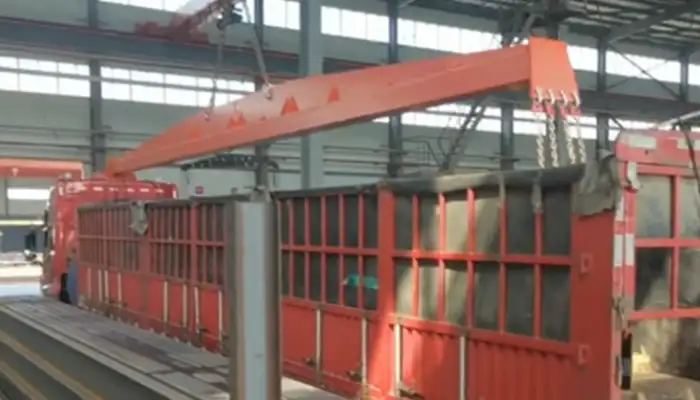
Overhead crane with tailored spreader beam
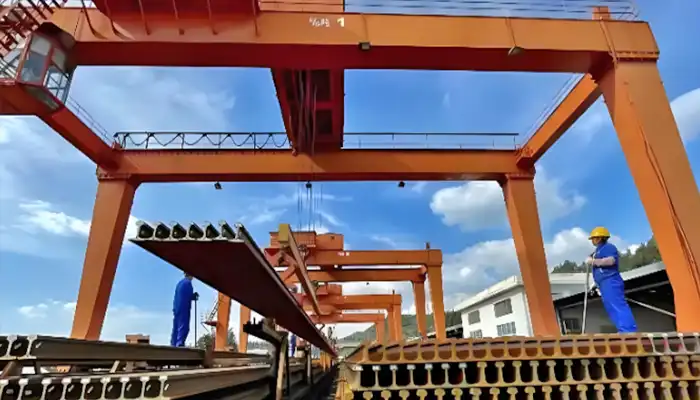
gantry crane with tailored clamp spreader
Beam Clamps and Spreaders
Beam clamps and spreaders are essential for long beams.
- Adjustable clamps can fit different beam sizes and profiles, such as I-beams, H-beams, or channels.
- Spreaders are used to prevent excessive bending in the middle of the beam by distributing the load evenly across the lifting points.
- Why it matters: 12-meter beams are long enough that lifting at just one or two points without a spreader can cause sagging. This stresses the beam and can damage both the material and the crane.
Practical Tip: For very long beams, consider using custom-length spreader bars or multiple adjustable clamps to maintain a straight, safe lift.
Slings and Chains
Slings and chains are the connection between the crane and the beam. Choosing the right type and rating is critical.
- Wire rope slings are strong and durable, suitable for heavy beams.
- Synthetic slings are lighter and can protect the beam surface from scratches or dents.
- Ensure slings have sufficient length and load rating for the beam plus a safety margin.
- Two-point or multi-point lifting helps support the beam along its entire length and reduces bending.
Practical Tip: Inspect slings and chains before every lift. Look for fraying, corrosion, or wear, especially on the edges that contact clamps or hooks.
Hooks and Shackles
Hooks and shackles are the final connection points, and they must handle the load safely.
- Use heavy-duty hooks and shackles rated for the beam weight plus at least 20% extra for safety.
- Ensure proper attachment points on the beam, slings, and crane to prevent slipping or rotation.
- Check that hooks have safety latches to secure the slings and prevent accidental detachment.
Practical Tip: For long beams, always lift slowly and keep the beam level. Even a properly rated hook can fail if the load shifts suddenly.
Lifting Methods for 12-Meter Beams
How you lift a 12-meter steel beam depends on its weight, rigidity, and environment. Using the correct lifting method prevents sagging, twisting, or accidents. The following approaches are commonly used, each suited for different scenarios:
Multiple gantry cranes for super long steel beam handling with tandem operation
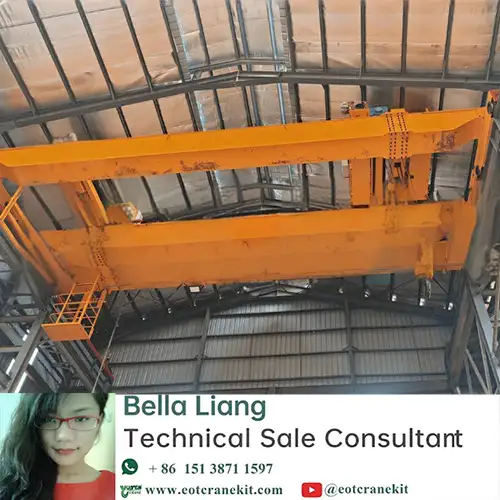
Overhead crane with tailored spreader for long steel beam handling
Single-Point Lifts
Single-point lifts involve raising the beam from one central point, usually using a hook or crane trolley. This method is simple, but it works best only under certain conditions.
- Best suited for short moves or relatively light beams.
- The beam is supported at the center, reducing the number of accessories needed.
- Limitations: Long or heavy beams may bend or twist in the middle.
Practical Tip: Only use single-point lifts for beams that are short, lightweight, or reinforced. Avoid single-point lifts for 12-meter beams heavier than 2–3 tons.
Two-Point Lifts
Two-point lifts are the most common method for 12-meter beams, providing better stability during handling.
- Slings or clamps are attached at both ends of the beam.
- This method prevents sagging and keeps the beam level during transport.
- Suitable for horizontal or slightly elevated moves, such as transferring from storage to installation or assembly.
Practical Tip: Use spreaders between slings and the crane hook to reduce stress on the beam. Lift slowly and ensure both ends rise at the same speed for a safe, level move.
Multi-Crane Lifts
For extremely long or heavy beams, more than one crane may be necessary. Multi-crane lifts require careful planning and coordination.
- Each crane supports a portion of the beam to distribute weight evenly.
- Requires synchronized motion to prevent sagging or twisting.
- Common in shipbuilding, industrial assembly, or large construction sites.
Practical Tip: Use clear communication signals or a synchronized crane control system. Never attempt multi-crane lifts without precise coordination.
Rotational Considerations
Sometimes beams need to be rotated during placement, such as aligning them for installation or fitting into frames.
- Turnbuckles, adjustable clamps, or rotating lifting beams allow controlled rotation.
- Prevents uncontrolled spinning that can damage the beam or endanger workers.
- Always plan the rotation path to avoid obstacles and maintain balance.
Practical Tip: Test a slow rotation before lifting to the final position. Ensure all attachment points remain secure throughout the rotation. Check more on Double-Hoist vs. Spreader Overhead Bridge Cranes for Long Loads
Safety Considerations
Handling 12-meter steel beams comes with inherent risks. Long beams are heavy, can bend or twist, and may swing unexpectedly if not properly controlled. Following safety best practices is essential to protect both personnel and materials during every lift.
Avoid Lifting Over Personnel
Before lifting a beam, make sure no one is standing beneath it. Long beams can swing or fall unexpectedly, and lifting over personnel is extremely dangerous. Always plan the lift area to keep everyone clear.
- Never allow workers to stand directly under a suspended beam.
- Mark a safety zone around the lift area to prevent accidental entry.
- Use warning signs or physical barriers in workshops or outdoor sites.
Maintain Proper Lifting Angles and Load Distribution
Proper lifting angles and evenly distributed load points are critical. Incorrect angles or unbalanced slings can bend the beam, stress the crane, or cause the load to shift dangerously.
- Ensure slings or clamps are evenly spaced for two-point or multi-point lifts.
- Align the crane hook with the beam's center of gravity.
- Avoid lifting at extreme angles that can damage the beam or overload the crane.
Inspect Cranes and Accessories Before Every Lift
Regular inspections prevent accidents caused by worn or damaged equipment. Checking cranes and lifting accessories before every lift ensures both safety and smooth operation.
- Check slings, clamps, hooks, shackles, and crane components for wear, corrosion, or damage.
- Verify load ratings match or exceed the beam weight, including a safety margin.
- Inspect crane rails, trolleys, and motors to confirm proper operation.
Use Tag Lines to Control Swing and Rotation
For long beams, uncontrolled swing or rotation can be dangerous. Tag lines allow workers to guide the beam safely during lifts, preventing collisions or loss of control.
- Attach tag lines to guide the beam's movement.
- Prevent rotation, swinging, or contact with nearby structures.
- Assign trained personnel to control each tag line and maintain clear communication with the crane operator.
Maintenance and Inspection
Regular maintenance and inspection are essential when handling 12-meter steel beams. Long beams place extra stress on cranes and accessories, so even small wear or damage can lead to serious problems. Staying proactive prevents accidents, reduces downtime, and keeps lifting operations smooth.
Inspect Clamps, Slings, and Hooks
Before every lift, check all lifting accessories for signs of wear or damage. These components carry the full load of the beam, so even minor defects can compromise safety.
- Look for wear, deformation, fraying, or corrosion on slings and hooks.
- Check beam clamps for proper function and secure locking mechanisms.
- Replace any accessory that shows signs of fatigue or damage.
Practical Tip: Keep a log of inspection dates and findings for all lifting accessories to track their condition over time.
Verify Crane Components
Cranes themselves must be capable of handling the stress of long beams. Regular checks help prevent mechanical failure during lifts.
- Ensure crane rails, trolleys, and motors are rated for the beam's weight and length.
- Inspect moving parts for smooth operation and alignment.
- Check for any signs of structural wear or fatigue in the crane frame or supports.
Practical Tip: Schedule monthly or quarterly crane inspections depending on usage frequency and beam weights handled.
Perform Preventive Maintenance
Proactive maintenance reduces the risk of unexpected downtime and keeps lifting operations safe.
- Lubricate moving parts, tighten bolts, and replace worn components before failure occurs.
- Clean rails and crane paths to prevent obstruction or uneven movement.
- Train operators to report unusual noises, vibrations, or irregular movements immediately.
Practical Tip: Combine preventive maintenance with scheduled inspections to create a comprehensive safety routine, minimizing the chance of accidents during beam handling.
Supplier and Expert Consultation
Selecting the right supplier or consulting with experts is just as important as choosing the crane and accessories. Handling 12-meter steel beams safely and efficiently requires experience, tested equipment, and tailored solutions. Working with knowledgeable suppliers reduces risk and ensures smooth operations from lifting to placement.
Choose Experienced Suppliers
When handling long steel beams, not all suppliers are equal. Experience matters because beam length and weight add complexity that typical lifting operations may not cover.
- Look for suppliers with proven experience in lifting and transporting long beams.
- Check their track record in workshops, construction sites, or industrial assembly.
- Prefer suppliers who can provide onsite guidance or technical support during setup and lifting.
Practical Tip: Ask for examples or case studies of previous projects involving beams 10 meters or longer to gauge their expertise.
Verify Certifications and Testing
Long beam lifts require equipment that meets industry safety standards. Proper certification ensures the crane, slings, clamps, and accessories are reliable and rated for your beam size and weight.
- Request certifications, third-party testing reports, and load testing documents.
- Ensure customization options, like spreaders, adjustable clamps, or beam-length modifications, are available.
- Confirm that all equipment is compliant with local safety regulations.
Practical Tip: Don't rely solely on supplier claims—always ask for documentation showing equipment performance under loads similar to your 12-meter beams.
Expertise Ensures Safety and Efficiency
Working with knowledgeable suppliers saves time, prevents accidents, and reduces material damage. Their experience helps you choose the right crane, accessories, and lifting method for your specific situation.
- Expertise ensures lifts are planned, executed, and monitored correctly.
- Minimizes the risk of beam sagging, twisting, or collisions during handling.
- Provides guidance for operator training, maintenance, and inspection routines.
Practical Tip: Treat supplier consultation as part of your safety plan. A supplier who understands long beam handling can prevent costly mistakes and delays.
Conclusion
Handling 12-meter steel beams is not a task to take lightly. Their length and weight create unique challenges that require careful planning and attention to detail. Choosing the right crane, lifting method, and accessories is essential for both safety and efficiency.
Key Takeaways
Before lifting long beams, consider these critical points:
- Proper Crane Selection: Use overhead, gantry, or mobile cranes suited to your environment, beam weight, and lifting height. The right crane prevents overloading and ensures smooth, controlled movement.
- Two-Point or Multi-Crane Lifts: For long or heavy beams, two-point or multi-crane lifts are often necessary. These methods prevent sagging, twisting, and structural stress during handling.
- Experienced Supplier Consultation: Working with suppliers who understand long beam handling reduces risk, saves time, and protects both personnel and materials. Ask for certifications, testing reports, and customization options like spreaders or adjustable clamps.
- Accessories and Safety: Use appropriate slings, clamps, hooks, and spreaders. Follow safety protocols, inspect equipment regularly, and control beam movement with tag lines and proper lifting angles.


Yuantai Cranes
Overhead Crane Manufacturer with CE, ISO, SGS, CNEX Certificates.
- Main Specifications - Capacity: 0.5–550 tons | Span: up to 40m | Speed: 0.8–12 m/min | Duty: A3–A7 | Power: 380–690V, 50/60Hz | Control: pendant/remote/cabin
- Full engineering: FEA/PLC/VFD + in-house build + global delivery + on-site support, for workshops, factories, EPC contractors, industrial projects, etc.
- Support: design, manufacturing, testing, service – end-to-end, customized lifting solutions worldwide.
How to Get an Accurate Crane Price for Your Application?
Tips: Copy the spec list, fill in your details, and paste it into the form on the right/ down-below for a quick price.
- Crane type:_____ . (e.g., overhead crane, gantry crane, jib crane)
- Max weight to lift:_____ tons. (e.g., 2t, 5t, 10t, 20t, 50t)
- Lifting height:_____ m. (How high does the hook need to reach?
- Workshop width (span):_____ m . (Distance between the two crane rails)
- Travel distance:_____ m . (How long does the crane need to move along the runway?)
- Control type:_____. (Pendant / remote / cabin Control)
- Power supply:_____. (Local voltage & frequency – e.g., 380V, 50Hz, 3-phase)
- What will it be used for?_____ (e.g., steel fabrication, concrete products, mold handling, general manufacturing, etc.)
- Any special requirements?_____ (e.g., extreme temperature, dusty or explosive environment, special paint color, etc.)
Just leave a message via the contact form and our hoist and crane engineer will contact you with in 24working hours.
Get Your Custom Quote–Quick & Easy
Fill in what you know. Skip what you don't – we'll help.Any question will be reply with 24 working hours