Typical Applications of Outdoor Bridge Cranes & Buyer Insights
Content Quick Link
Typical Applications for Outdoor Bridge Cranes Without Buildings: Key Benefits, Use Cases, and Buyer Insights
Key Takeaways
Most important takeaway:
Outdoor bridge cranes without buildings provide cost-effective, flexible, and efficient material handling solutions for industries where space, heavy loads, and weather-resistant operations are critical. Buyers can save on construction costs while maintaining high operational efficiency.
Questions solved in this article:
- Where are outdoor bridge cranes without buildings typically used?
- What are the advantages over indoor or gantry cranes?
- How to ensure safety, durability, and productivity in open-air installations?
- What design considerations are critical for long-term operation?
Key insights in bullets:
- Reduces upfront infrastructure costs by eliminating buildings or warehouses.
- Ideal for steel yards, bulk material storage, precast concrete yards, and port container handling.
- Can handle heavy loads and oversized materials with flexible layouts.
- Requires corrosion protection, weatherproof hoists, and robust runway structures.
- Supports future expansion and easier material flow without building constraints.
Outdoor Bridge Cranes Without Buildings
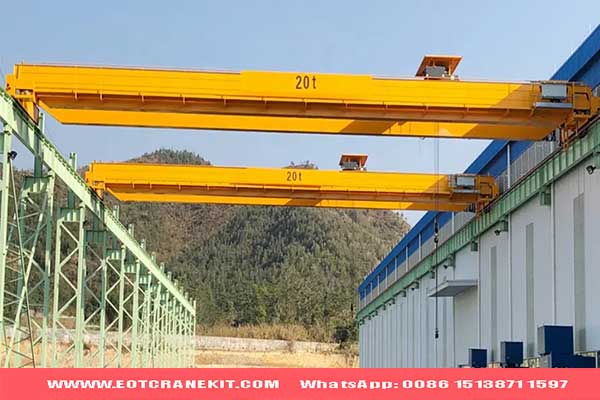
Outdoor bridge cranes without buildings are essentially overhead cranes installed in open spaces, without the need for a surrounding factory or warehouse. They typically come in top-running single girder or double girder designs, with rails mounted on steel columns or freestanding support structures. These cranes can lift and transport heavy materials across large areas, often handling items that are too large or bulky for conventional indoor spaces.
Key Characteristics
- Rails supported on self-standing steel frames or columns.
- Single or double girder designs depending on load and span requirements.
- Hoists are often weatherproofed to withstand rain, sun, and dust.
- Suitable for heavy-duty lifting outdoors without relying on building structures.
Indoor vs. Outdoor Crane Setups
The main difference between indoor and outdoor cranes is, unsurprisingly, the surrounding environment and the constraints it imposes. Indoor cranes operate within factory buildings, which provide protection from weather, controlled conditions, and often simpler power connections.
Outdoor cranes, on the other hand, face variable weather, temperature changes, and sometimes dust or corrosive environments. This requires careful design choices such as:
- Corrosion-resistant materials and protective coatings on the crane structure.
- Weatherproof hoists and enclosures for electrical systems.
- Stronger runway support to withstand wind and thermal expansion.
- Flexible layouts that can cover larger, irregularly shaped yards.
In short, indoor cranes are easier to maintain but limited by space, while outdoor cranes give more freedom to handle oversized or bulky materials across open yards.
The Growing Trend of Open-Air Crane Installations
In the past few years, industries like steel processing, precast concrete, bulk material handling, and port logistics have increasingly opted for outdoor bridge cranes. Several factors contribute to this trend:
- Cost savings: Avoiding the construction of a full building saves both time and money.
- Material handling efficiency: Open-air setups allow large, irregular, or heavy loads to be moved without spatial constraints.
- Flexibility: Layouts can be adjusted, expanded, or relocated as production or storage needs change.
- Durability improvements: Modern weatherproofing and maintenance practices make outdoor cranes reliable year-round.
Industries Adopting Open-Air Bridge Cranes
- Steel yards handling slabs, billets, and coils.
- Precast concrete stockyards with large beams and panels.
- Ports managing containers or oversized cargo.
- Mining and bulk material sites with open-air storage and transfer operations.
Outdoor bridge cranes are no longer just a niche solution. With proper design, they offer a practical, cost-effective, and reliable way to move materials efficiently across large open spaces.
Advantages of Outdoor Bridge Cranes Without Buildings
Outdoor bridge cranes without buildings provide cost savings, operational flexibility, fast installation, durability, and long-term planning benefits for industrial operations in open-air environments.
Cost Efficiency
One of the biggest reasons companies choose outdoor bridge cranes without buildings is cost savings. Constructing a warehouse or factory building can be expensive, and for operations that don't require enclosed space, it's often unnecessary. By installing cranes outdoors, buyers can reduce expenses not only for the structure itself but also for foundations, roofing, and lighting.
- Savings on building materials, labor, and permits.
- Reduced need for climate control, ventilation, and lighting infrastructure.
- Ideal for operations where open-air storage is already acceptable.
Operational Flexibility
Outdoor bridge cranes allow layouts that indoor cranes simply can't. Without walls to constrain movement, cranes can cover irregularly shaped yards, adjust spans, or move along multiple runways. This flexibility is especially valuable when handling oversized or irregular loads, such as steel beams, precast concrete panels, or bulky machinery.
- Easily reconfigure crane position or runway alignment as operations change.
- Handle multiple load types without building modifications.
- Combine with other outdoor equipment like forklifts or trucks for smoother material flow.
Fast Installation
Outdoor cranes often use self-supporting steel columns or freestanding runway structures. This makes installation faster and simpler compared to indoor cranes that rely on building columns or foundations. The modular design also allows partial operation while additional sections are being installed.
- Runway systems can be quickly mounted and adjusted.
- Less reliance on site preparation or building timelines.
- Enables temporary or semi-permanent installations for short-term projects.
Durability and Safety
Being exposed to sun, rain, wind, and dust means outdoor cranes must be built to last. Modern weatherproof bridge cranes come with corrosion-resistant coatings, protective hoist covers, and sealed electrical enclosures. Safety systems like overload protection and limit switches are standard, ensuring reliable operation even in harsh conditions.
- Select cranes with anti-corrosion paint or galvanization.
- Use hoists and controls rated for outdoor exposure.
- Schedule regular inspections for moving parts and electrical components.
Long-Term Planning
Outdoor bridge cranes are flexible in the long term. If a company needs to expand the yard, add more cranes, or reconfigure production flow, outdoor installations make this much easier. There's no need to modify walls, ceilings, or other building constraints. This is particularly useful for industries where production scales up or changes seasonally.
- Easy to add extra cranes or extend runway length.
- Temporary or seasonal operations can be accommodated without structural modifications.
- Supports future growth without significant capital expenditure.
Typical Applications of Outdoor Bridge Cranes Without Buildings
Outdoor bridge cranes without buildings serve multiple industries, including steel processing, precast concrete yards, ports, mining, and heavy equipment storage, offering flexible and efficient material handling in open-air environments.
Steel and Metal Processing Yards
Outdoor bridge cranes are widely used in steel mills and metal processing yards. These cranes handle slabs, billets, coils, pipes, and steel sheets, moving them between storage areas, processing stations, and shipping zones. Open-air operation is particularly beneficial because it allows large items to be stored and retrieved without the spatial limits of a building.
- Electromagnetic cranes for handling steel coils or slabs.
- Mechanical clamps for secure lifting of irregular shapes.
- Adjustable hoists for different weights and load types.
- Ensure the crane's lifting capacity exceeds the heaviest material plus a safety margin.
- Consider weatherproof coatings if the steel yard is exposed to rain or moisture.
- Plan layout for smooth flow between loading, storage, and transport areas.
Precast Concrete and Construction Material Yards
Outdoor bridge cranes are essential in precast concrete yards, where they move beams, panels, and large precast blocks. These cranes make stockyard management more efficient by providing precise placement, fast retrieval, and the ability to handle multiple types of concrete elements in a single yard.
- Frees up ground space for stacking and transport vehicles.
- Reduces manual handling and improves safety.
- Supports modular or repetitive lifting tasks in construction projects.
- Select cranes with hoists designed to handle concrete weight and vibration.
- Runway alignment should allow easy access for trucks and forklifts.
Port Container Handling Areas
Outdoor bridge cranes can serve as efficient alternatives or supplements to traditional yard gantry cranes in ports. They move containers in open storage yards or directly onto trucks and ships, streamlining loading and unloading processes.
- Container spreaders for secure handling.
- Heavy-duty hooks for oversized or irregular loads.
- Optional remote control operation for safety and precision.
- Open-air cranes can cover long distances between storage rows.
- Consider wind load and corrosion protection due to saltwater exposure.
- Plan for integration with transport vehicles and stacking systems.
Mining and Bulk Material Handling
In mining yards and bulk material storage areas, outdoor bridge cranes are ideal for transporting coal, ores, sand, gravel, or other bulk commodities. They work efficiently in open stockyards, where dust, irregular load sizes, and heavy weight are common.
- Grab buckets for bulk material handling.
- Hoists designed for dusty or abrasive environments.
- Long spans to reach multiple storage piles from a single crane.
- Schedule frequent inspections of hoists and hooks to prevent wear.
- Ensure crane speed and capacity match material flow requirements.
- Consider protective coatings to reduce corrosion from moisture or chemicals.
Heavy Equipment and Machinery Yards
Outdoor bridge cranes are also used to lift large machinery, vehicles, or oversized equipment. They can serve temporary or semi-permanent operations where heavy items need to be moved, stored, or loaded for transport.
- Flexibility to handle equipment of various shapes and weights.
- Can operate in open-air yards without building constraints.
- Supports temporary setups for construction or industrial projects.
- Use adjustable hoists or multi-trolley systems for irregular loads.
- Ensure ground stability for crane columns or supports.
- Consider operator visibility and safety zones for large, slow-moving equipment.
Key Design Considerations for Outdoor Bridge Cranes Without Buildings
When planning an outdoor bridge crane installation, careful attention to runway systems, weatherproofing, safety, power, and maintenance ensures long-term performance and safety in open-air operations.
Runway System: Self-Supporting vs. Ground-Supported
One of the most critical elements in an outdoor crane installation is the runway. Unlike indoor cranes that rely on building columns, outdoor cranes need their own support structure. There are two main options:
- Self-supporting steel columns: These columns hold the crane rails independently of the ground or surrounding structures. They are ideal for flexible layouts, uneven terrain, or temporary installations.
- Ground-supported rails: These use reinforced concrete foundations or steel beams mounted on the ground. They can handle heavier loads and longer spans but require more initial construction.
- Evaluate soil conditions before choosing ground-supported systems.
- For temporary yards or frequently reconfigured layouts, self-supporting columns offer faster installation and relocation.
- Span length and crane load capacity directly influence the type and spacing of support columns.
Weatherproofing
Outdoor cranes face sun, rain, wind, and sometimes snow. Proper weatherproofing ensures durability and reduces maintenance costs.
- Corrosion-resistant coatings: Galvanization or industrial-grade paint protects steel structures.
- Enclosed hoists and motors: Prevents water ingress and dust contamination.
- Protective covers and enclosures: Shields electrical panels, wires, and control systems from direct exposure.
- Choose hoists and controls rated for outdoor environments.
- Inspect protective coatings regularly, especially in coastal or humid areas.
- Consider additional UV protection for plastics and rubber parts.
Safety Systems
Safety is crucial when operating heavy loads in open-air environments. Outdoor cranes often include:
- Limit switches: Prevent the crane or hoist from traveling beyond safe points.
- Anti-collision devices: Avoid accidents when multiple cranes operate in the same yard.
- Overload protection: Stops lifting if the load exceeds the crane's rated capacity.
- Regularly test all safety devices according to manufacturer guidelines.
- Train operators specifically for outdoor conditions, including wind, rain, or reduced visibility.
- Plan yard layout to minimize crossing paths or congested zones.
Power and Controls
Outdoor cranes need electrical and control systems designed for exposed environments.
- Weather-resistant power cables and connectors.
- Remote control systems to improve safety and efficiency.
- Power supply planning for longer spans or multiple cranes on a single runway.
- Ensure grounding and surge protection for electrical systems.
- Consider energy-efficient motors or hoists to reduce operational costs.
- Plan cable routing and connection points to avoid wear from moving trolleys or cranes.
Maintenance Planning
Regular inspections and maintenance are essential to keep outdoor bridge cranes safe and reliable. Harsh weather, dust, and heavy-duty use can accelerate wear and tear.
- Inspect hoists, hooks, and ropes for signs of corrosion or fatigue.
- Check rails and runway structures for alignment or cracks.
- Lubricate moving parts according to manufacturer recommendations.
- Schedule more frequent checks in coastal, humid, or dusty environments.
- Keep a maintenance log for each crane to track inspections and repairs.
- Train local staff for routine checks to prevent minor issues from becoming major problems.
Practical Case Examples of Outdoor Bridge Cranes Without Buildings
Outdoor bridge cranes without buildings are already widely used in real industrial operations. These examples show how they deliver cost-effective and efficient material handling across various industries.
Steel Yard – Handling Slabs and Billets
Project overview:
- Crane type: Double girder top-running bridge crane
- Capacity: 25 tons
- Span: 20 meters
- Application: Moving steel slabs, billets, and coils from storage to processing lines
Key benefits observed:
- Open-air setup eliminated the need for a large steel warehouse, saving thousands in construction costs.
- Electromagnetic hoists allowed fast handling of slabs, reducing labor requirements.
- Layout flexibility enabled efficient material flow between storage and production areas.
Buyer insights:
- Choosing a top-running outdoor crane can significantly reduce upfront costs.
- Proper weatherproofing ensures reliable operation year-round.
Precast Concrete Stockyard – Loading and Stacking Beams
Project overview:
- Crane type: Single girder bridge crane
- Capacity: 10 tons
- Span: 18 meters
- Application: Handling precast concrete panels, beams, and blocks for construction projects
Key benefits observed:
- Open-air operation allowed for stacking panels in multiple rows without space limitations.
- Hoist adjustments for various load sizes improved speed and safety.
- Crane mobility simplified truck loading and unloading at different yard locations.
Buyer insights:
- Outdoor cranes increase stockyard efficiency, especially for irregularly shaped or heavy loads.
- Flexible layouts mean the crane can adapt as production scales or changes.
Port Container Yard – Loading and Unloading Containers
Project overview:
- Crane type: Double girder bridge crane with spreader attachment
- Capacity: 30 tons
- Span: 25 meters
- Application: Handling containers from trucks to storage areas and vice versa
Key benefits observed:
- Reduced reliance on multiple mobile gantry cranes by covering longer spans with a single bridge crane.
- Remote control operation improved safety and precision.
- Open-air installation eliminated the need for a container shed, saving both cost and time.
Buyer insights:
- Outdoor cranes can integrate with trucks and other yard equipment efficiently.
- Investing in protective coatings and weatherproof hoists ensures long-term durability.
Summary of Buyer-Focused Benefits from Case Examples
- Cost Savings: Avoid building construction and reduce labor for material handling.
- Operational Efficiency: Faster movement of materials with flexible layouts and attachments.
- Flexibility: Open-air installations allow reconfiguration for future expansion or different load types.
- Durability: Proper design and maintenance ensure reliable, year-round performance.
Conclusion
Outdoor bridge cranes without buildings provide a practical and cost-effective solution for industries that need to move heavy loads across open-air yards. They are particularly useful when building a warehouse or factory isn’t necessary or practical. By carefully planning key elements—such as runway structure, weatherproofing, safety systems, and regular maintenance—buyers can ensure these cranes operate reliably and efficiently for years.
Choosing the right crane type, lifting capacity, span, and attachments is essential to match the materials, load sizes, and workflow of each site. With proper selection and installation, outdoor bridge cranes can significantly improve material handling efficiency, reduce labor, and support future expansion without costly modifications.
Final Buyer Takeaways:
- Industry Fit: Ideal for steel yards, precast concrete yards, port container yards, mining operations, and heavy machinery storage.
- Cost Efficiency: Reduces the need for building construction, saving both time and capital investment.
- Operational Flexibility: Supports safe, efficient, and adaptable material flow in open-air environments.
- Long-Term Value: Weatherproof and well-maintained cranes provide reliable, scalable solutions for changing operational needs.

Article by Bella ,who has been in the hoist and crane field since 2016. Bella provides overhead crane & gantry crane consultation services for clients who need a customized overhead travelling crane solution.Contact her to get free consultation.
Yuantai Cranes
Overhead Crane Manufacturer with CE, ISO, SGS, CNEX Certificates.
- Main Specifications - Capacity: 0.5–550 tons | Span: up to 40m | Speed: 0.8–12 m/min | Duty: A3–A7 | Power: 380–690V, 50/60Hz | Control: pendant/remote/cabin
- Full engineering: FEA/PLC/VFD + in-house build + global delivery + on-site support, for workshops, factories, EPC contractors, industrial projects, etc.
- Support: design, manufacturing, testing, service – end-to-end, customized lifting solutions worldwide.
How to Get an Accurate Crane Price for Your Application?
Tips: Copy the spec list, fill in your details, and paste it into the form on the right/ down-below for a quick price.
- Crane type:_____ . (e.g., overhead crane, gantry crane, jib crane)
- Max weight to lift:_____ tons. (e.g., 2t, 5t, 10t, 20t, 50t)
- Lifting height:_____ m. (How high does the hook need to reach?
- Workshop width (span):_____ m . (Distance between the two crane rails)
- Travel distance:_____ m . (How long does the crane need to move along the runway?)
- Control type:_____. (Pendant / remote / cabin Control)
- Power supply:_____. (Local voltage & frequency – e.g., 380V, 50Hz, 3-phase)
- What will it be used for?_____ (e.g., steel fabrication, concrete products, mold handling, general manufacturing, etc.)
- Any special requirements?_____ (e.g., extreme temperature, dusty or explosive environment, special paint color, etc.)
Just leave a message via the contact form and our hoist and crane engineer will contact you with in 24working hours.
Get Your Custom Quote–Quick & Easy
Fill in what you know. Skip what you don't – we'll help.Any question will be reply with 24 working hours