Two-Crane Lifts for Turbine Shafts | 50–300 Ton Crane Guide
Content Quick Link
Two-Crane Lifts for Long Turbine Shafts: Key Insights for 50–300 Ton Crane Buyers
Key Takeaways
- Two-crane lifts are essential for handling long, heavy turbine shafts safely.
- Proper crane selection, capacity planning, and synchronization are critical.
- Understanding load behavior, environmental constraints, and safety measures can prevent accidents and equipment damage.
Introduction: Handling Long Turbine Shafts Safely
Why long loads are challenging Turbine shafts and other long machinery components aren’t like your typical loads. They can be 15–20 meters or longer and weigh tens to hundreds of tons. Lifting them with just one crane is risky. The shaft can bend, twist, or swing unexpectedly, creating hazards for both the equipment and the people on site.
The role of two-crane lifts Two-crane lifts solve this problem by supporting the load at multiple points. This approach:
- Reduces bending and stress on the shaft
- Distributes weight evenly across cranes
- Minimizes risk of damage or accidents
When a single crane cannot handle the length or weight safely, a coordinated two-crane lift is often the only practical option.
Why this matters for crane buyers If you are planning a turbine installation, generator replacement, or other large-scale project, understanding multi-crane lifts is essential. The right planning can save time, reduce costs, and prevent accidents. Key considerations include:
- Crane capacity: Ensure each crane can handle its portion of the load safely.
- Building layout: Check runway spacing, ceiling height, and obstructions.
- Coordination: Plan how the cranes will move together to keep the load stable.
Bottom line Recognizing the unique challenges of long-load handling early helps crane buyers make informed decisions. Choosing the correct cranes and planning their operation carefully ensures safety, efficiency, and successful project execution.
Suitable Crane Configurations for Two-Crane Lifts
Two EOT Cranes
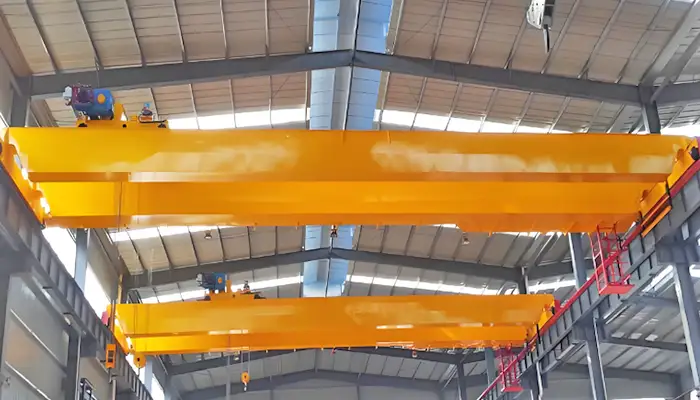
Using two overhead traveling (EOT) cranes is the most common option for indoor lifts.
Why it works well:
- Provides excellent indoor flexibility, moving along established runway beams.
- Offers high precision, allowing careful positioning of long shafts or housings.
- Leverages existing crane infrastructure, which can reduce project setup costs.
Key considerations for buyers:
- Synchronization is essential: Both cranes must lift and move in unison to prevent twisting or bending the load.
- Runway alignment matters: Even small misalignments can stress the shaft or overload one crane.
- Operator coordination: Skilled operators are needed to maintain smooth and controlled movement.
EOT Crane + Gantry Crane
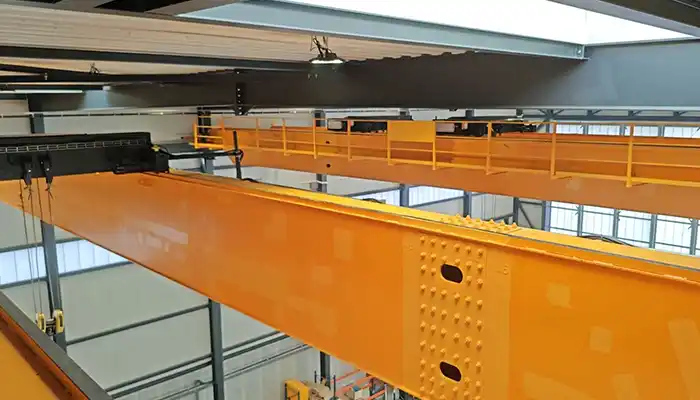
For some long or irregular loads, combining an EOT crane with a gantry crane provides the extra reach or flexibility needed.
Why this combination works:
- Combines the stability of a permanent overhead crane with the mobility of a gantry crane.
- Useful for extra-long or irregular loads that exceed the span of a single EOT crane.
- Can adapt to temporary lifting needs in areas where installing another EOT crane is impractical.
Planning tips for buyers:
- Ensure the gantry crane can move freely without obstructions during the lift.
- Check the load's center of gravity and support points to maintain stability.
- Consider coordination between the two cranes using electronic load-sharing or careful operator communication.
- Make sure the environment allows safe operation of both cranes simultaneously.
Bottom Line for Crane Buyers
Choosing the right crane configuration depends on load length, weight, and the installation environment. Two EOT cranes are ideal for most indoor turbine lifts, while EOT + gantry combinations work best for irregular, extra-long, or temporary lifting situations. Planning for synchronization, mobility, and load stability is critical to prevent damage and ensure a smooth lift.
Load Characteristics & Capacity Requirements
Typical Crane Capacities
For long turbine shafts and similar heavy machinery, each crane usually needs a capacity of 50–300 tons. Keep in mind:
- The static weight of the load is only part of the picture.
- Dynamic forces during lifting and movement can increase the load on each crane.
- Always include a 10–20% safety margin to account for unexpected stress or slight miscalculations.
Common Loads for Two-Crane Lifts
Long, heavy components often handled with two cranes include:
- Turbine shafts – extremely long with concentrated weight at certain points.
- Generator housings – heavy and sometimes irregularly shaped.
- Other elongated machinery – such as pump shafts, gearboxes, or pressure vessels.
Critical Considerations for Buyers
Load Weight and Distribution
- Know the exact weight and how it is spread along the shaft or component.
- Uneven weight distribution can overload one crane, so plan lifting points carefully.
Center of Gravity
- The load's balance point affects stability during lifting.
- Misjudging the center of gravity can cause tilting, twisting, or bending.
Load Rigidity and Length
- Long or flexible components may bend under their own weight.
- Cranes must lift at points that minimize bending stress.
- Rigid components are easier to handle but still need correct positioning.
Practical Advice for Crane Buyers
- Verify the weight, length, and rigidity before finalizing crane selection.
- Plan lifting points carefully to maintain balance and minimize stress.
- Include safety margins for dynamic effects and potential miscalculations.
Bottom Line
Knowing the load inside and out is essential. Proper understanding of weight, balance, length, and rigidity ensures safe and efficient two-crane lifts, prevents damage, and helps buyers select the right equipment for heavy turbine shafts and other long machinery.
Operational Environment
Typical Locations
Two-crane lifts are commonly performed in:
- Turbine halls – indoor areas with existing crane runways and limited maneuvering space.
- Power plant assembly areas – where heavy components like generator housings or long shafts are installed.
These locations often have fixed equipment, structural beams, and low ceilings that can limit crane movement. Buyers must account for these factors early in planning.
Environmental Constraints
Before a lift, consider potential physical constraints:
- Limited floor space or low ceilings – can restrict crane movement and positioning.
- Existing equipment – pipes, ductwork, or machinery can block paths or create collision risks.
- Structural limitations – runway beams, columns, or temporary supports may restrict load placement or crane operation.
Ignoring these constraints can lead to delays, unsafe lifts, or even damage to equipment and the facility.
Pre-Lift Planning and Risk Assessment
A successful two-crane lift always starts with careful planning:
- Site survey: Inspect the hall or assembly area to identify obstacles and clearance issues.
- Lift path design: Determine the safest route for the load, considering height, swing, and crane reach.
- Risk assessment: Identify potential hazards and prepare mitigation measures, such as temporary supports or additional rigging.
- Coordination plan: Ensure both crane operators and ground personnel understand the lift sequence and communication methods.
Practical Advice for Crane Buyers
- Evaluate the building layout and runway infrastructure before selecting cranes.
- Plan for obstructions and environmental challenges—don't assume the lift can happen exactly as in an open space.
- Make risk assessment and pre-lift planning part of the procurement and project planning process.
Bottom Line
The operational environment has a major impact on the safety and success of two-crane lifts. Buyers who carefully consider space limitations, structural constraints, and site-specific risks can ensure smoother, safer turbine shaft or heavy machinery handling.
Synchronization & Coordination
Why Synchronization Matters
For two-crane lifts, understanding why synchronization is necessary helps buyers appreciate the risks of uncoordinated lifts. Even minor misalignment can create serious hazards. Proper synchronization provides:
- Load stability Supporting the shaft at multiple points ensures it doesn't twist or bend under its own weight.
- Even weight distribution Balances the load between cranes, preventing overload on one unit and reducing the risk of mechanical failure.
- Smooth positioning Allows precise placement of turbine shafts or generator housings, even in constrained environments.
Methods of Synchronization
There are several practical ways to achieve coordination during a two-crane lift. Each method has pros and cons, depending on your equipment and site conditions:
- Electronic load-sharing systems Modern cranes may include systems that automatically monitor and balance the load in real time, reducing reliance on operator judgment.
- Operator coordination with communication devices Radios or headsets allow operators to lift and move in sync, following pre-planned sequences and agreed signals.
- Mechanical synchronization (less common today) Some setups use linkages or cables to physically connect cranes, forcing them to move together. This is rarely used in modern turbine hall lifts but may still appear in older installations.
Training and Simulation
Even with the best cranes and systems, human factors remain critical. Training and practice lifts reduce mistakes and increase confidence.
- Simulation lifts Conduct trial runs with small or dummy loads to verify procedures before handling the actual turbine shaft.
- Operator training Ensure each crane operator understands timing, communication signals, and emergency stop protocols.
- Team coordination Ground personnel, riggers, and operators must work together seamlessly, with clearly defined roles during every phase of the lift.
Practical Advice for Crane Buyers
- Look for cranes with built-in electronic synchronization features for long-load handling.
- Include operator training and trial lifts as part of your project planning.
- Develop clear communication and coordination plans for all team members involved in the lift.
Bottom Line
Synchronization and coordination are non-negotiable for two-crane lifts. Buyers who plan carefully, use the right systems, and train their teams can lift long turbine shafts safely, efficiently, and with minimal risk of damage.
Planning & Safety Considerations
Steps for Planning a Two-Crane Lift
Before lifting a long turbine shaft, each aspect of the operation must be carefully assessed. Start by considering the cranes, the load, and how the lift will be executed:
- Confirm crane capacities and runway spans Make sure each crane can safely handle its share of the load. Check that runway beams, columns, and supporting structures are rated for the combined weight and dynamic forces of the lift.
- Evaluate load characteristics and rigging points Determine the exact weight, center of gravity, and length of the shaft. Identify strong, engineered lifting points to prevent bending or damage during the lift.
- Establish synchronized lift protocols Decide how the cranes will move together, including speed, sequence, and communication signals. Electronic load-sharing systems or operator coordination plans can help maintain even movement.
- Define emergency stop procedures and contingency plans Prepare for unexpected issues, such as a crane malfunction, miscommunication, or sudden load shift. Everyone involved should know the emergency stop sequence and safe zones.
Safety Standards and Best Practices
Adhering to recognized safety standards ensures that lifts meet legal and industry requirements, reducing risk for personnel and equipment.
- Safety standards: Follow ISO, FEM, and local regulations to guide lift planning, crane selection, and operator training.
- Use of guide ropes, tag lines, and monitoring systems: These tools help control the load, prevent swinging, and improve precision during positioning.
Practical Advice for Crane Buyers
- Include pre-lift planning and risk assessment as part of your procurement checklist.
- Verify that your cranes and rigging meet all relevant safety standards for the expected load.
- Ensure operators and ground personnel are trained in synchronized lifts and emergency procedures.
Bottom Line
Careful planning and strict adherence to safety protocols are essential for successful two-crane lifts. Buyers who account for crane capacity, load characteristics, synchronization, and safety measures can execute long-load handling efficiently, safely, and with minimal risk.
Practical Tips for Crane Buyers
Check Lifting Points and Crane Specs
Before lifting, confirm that the load's engineered lifting points are rated for the weight and length of the shaft. At the same time, review crane specifications: capacity, span, hoist type, and control systems.
- Using points or cranes that are under-rated can lead to twisting, bending, or even structural failure.
- Ensure that all specifications match the requirements of your specific project.
Verify Runway and Structural Capacity
Long shafts generate dynamic forces during lifts, not just static weight. It's essential to check that the runway beams and supporting structures can safely handle these forces.
- Inspect runway alignment, strength, and connections.
- Account for forces when the load starts, stops, or changes direction.
Use Temporary Supports or Load Spreaders
For very long or flexible components, temporary supports or load spreaders can reduce bending and prevent stress on the shaft or cranes.
- Supports distribute weight evenly across lifting points.
- Spreaders can minimize sagging and twisting, making the lift smoother and safer.
Schedule Lifts During Low-Activity Periods
Timing matters. Performing lifts when the hall or assembly area has minimal activity reduces risks of interference, collisions, or distractions.
- Coordinate with other teams to clear the lift path.
- Allow operators and riggers to focus entirely on the lift for maximum control.
Key Takeaway
Practical steps like verifying lifting points, checking structural capacity, using supports, and timing the lift carefully can significantly reduce risk and improve efficiency for two-crane lifts. For crane buyers, attention to these details ensures smoother, safer operations and protects both equipment and personnel.
Conclusion
Two-crane lifts for long turbine shafts are complex, but fully manageable with the right preparation. Understanding the load, selecting the proper cranes, and planning the lift carefully makes a significant difference in safety and efficiency.
Key Takeaways for Crane Buyers
- Proper planning and capacity matching Choosing cranes with the correct capacities and verifying runway and structural support ensures the lift can be executed safely.
- Correct crane configuration Whether using two EOT cranes or an EOT paired with a gantry crane, the right setup is essential for handling long, heavy loads without risk of twisting or bending.
- Training and risk management Investing in operator training, synchronized lift procedures, and thorough risk assessment helps prevent accidents and protects both personnel and equipment.
Final Thought
For crane buyers, two-crane lifts are not just about purchasing the right equipment—they’re about planning, coordination, and attention to detail. By combining proper crane selection, synchronization, and safety measures, even the longest turbine shafts can be lifted efficiently, safely, and with confidence.
Questions This Article Solves
1. When is a two-crane lift necessary?
A two-crane lift is needed whenever a single crane cannot safely handle the length or weight of the load. Long turbine shafts, generator housings, and other elongated machinery often exceed the span or capacity of one crane. Using two cranes supports the load at multiple points, reduces bending or twisting, and ensures a controlled, stable lift.
2. What crane configurations are suitable (EOT + EOT, EOT + Gantry)?
The choice of crane configuration depends on load length, environment, and flexibility needs:
- Two EOT cranes: Ideal for indoor turbine halls with established runways. Provides high precision and smooth movement.
- EOT + Gantry crane: Useful for irregular or extra-long loads where a single crane span is insufficient. Combines permanent and temporary lifting solutions, giving more flexibility in constrained areas.
3. How to ensure safe, synchronized lifting of long turbine shafts?
Safety and synchronization are critical for two-crane lifts:
- Use electronic load-sharing systems if available to balance the load automatically.
- Ensure operator coordination through radios or headsets, following a pre-planned sequence.
- Conduct simulation lifts or practice runs to train operators and riggers before handling the actual turbine shaft.
4. What factors should crane buyers consider for capacities between 50–300 tons?
For long-load handling, buyers need to consider several practical factors:
- Crane capacity and span: Each crane must handle its portion of the load safely, including dynamic forces.
- Load characteristics: Weight, length, center of gravity, and rigidity affect lifting points and crane selection.
- Operational environment: Runway strength, ceiling height, obstructions, and floor space can limit crane movement.
- Safety and coordination: Pre-lift planning, emergency procedures, and training reduce risks during the lift.
Bottom Line:
This FAQ section helps crane buyers understand when to use two cranes, which configurations work best, and how to plan lifts safely. Paying attention to these factors ensures long turbine shafts and heavy machinery are lifted efficiently, safely, and without damage.

Article by Bella ,who has been in the hoist and crane field since 2016. Bella provides overhead crane & gantry crane consultation services for clients who need a customized overhead travelling crane solution.Contact her to get free consultation.
Yuantai Cranes
Overhead Crane Manufacturer with CE, ISO, SGS, CNEX Certificates.
- Main Specifications - Capacity: 0.5–550 tons | Span: up to 40m | Speed: 0.8–12 m/min | Duty: A3–A7 | Power: 380–690V, 50/60Hz | Control: pendant/remote/cabin
- Full engineering: FEA/PLC/VFD + in-house build + global delivery + on-site support, for workshops, factories, EPC contractors, industrial projects, etc.
- Support: design, manufacturing, testing, service – end-to-end, customized lifting solutions worldwide.
How to Get an Accurate Crane Price for Your Application?
Tips: Copy the spec list, fill in your details, and paste it into the form on the right/ down-below for a quick price.
- Crane type:_____ . (e.g., overhead crane, gantry crane, jib crane)
- Max weight to lift:_____ tons. (e.g., 2t, 5t, 10t, 20t, 50t)
- Lifting height:_____ m. (How high does the hook need to reach?
- Workshop width (span):_____ m . (Distance between the two crane rails)
- Travel distance:_____ m . (How long does the crane need to move along the runway?)
- Control type:_____. (Pendant / remote / cabin Control)
- Power supply:_____. (Local voltage & frequency – e.g., 380V, 50Hz, 3-phase)
- What will it be used for?_____ (e.g., steel fabrication, concrete products, mold handling, general manufacturing, etc.)
- Any special requirements?_____ (e.g., extreme temperature, dusty or explosive environment, special paint color, etc.)
Just leave a message via the contact form and our hoist and crane engineer will contact you with in 24working hours.
Get Your Custom Quote–Quick & Easy
Fill in what you know. Skip what you don't – we'll help.Any question will be reply with 24 working hours