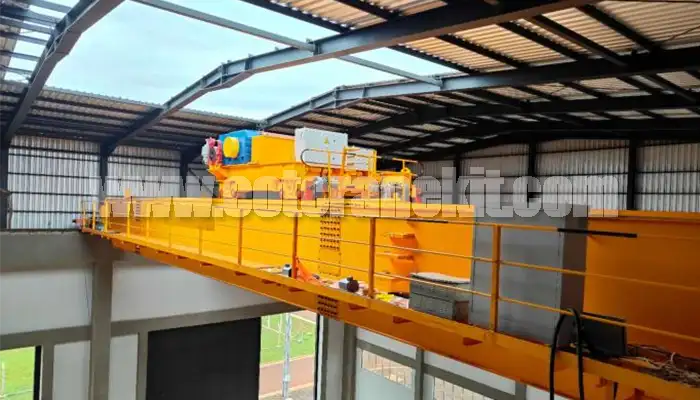
Inside Power Plants: Safe Crane Lifts for Generators & Boilers
Content Quick Link
Inside Power Plants: How Cranes Move Generators and Boilers Safely
Executive Takeaway (Most Important Point)
Moving generators, boilers, and other heavy equipment inside power plants is a highly planned and controlled operation. Success depends on selecting the right crane system, understanding equipment weight and geometry, assessing floor and structural capacity, and applying safe lifting practices. Precision, not brute force, drives efficiency and minimizes downtime.
- Crane selection is dictated by equipment weight, dimensions, and installation location, not just nominal capacity.
- Overhead bridge cranes, gantry cranes, and specialized lifting systems are commonly used.
- Floor or roof load capacity must be checked before planning lifts.
- Multi-crane or hydraulic systems may be required for oversized generators or boilers.
- Detailed lift planning and risk assessment reduces downtime and safety hazards.
Introduction: Challenges of Moving Heavy Equipment Inside Power Plants
Moving heavy equipment like generators, boilers, and pressure vessels inside a power plant is not just about strength—it's about precision, planning, and control. Unlike outdoor construction sites, where cranes can spread out and maneuver freely, indoor power plant environments are often tight, crowded, and full of obstacles. Every move must be thought through before the hook goes up.
Why Indoor Lifting Is More Complex Than Outdoor Lifting
Indoor lifts have challenges that don't exist on open sites:
- Limited space: Cranes have to operate between walls, piping, catwalks, and other equipment. There's little room for error.
- High weight of components: Generators can weigh several hundred tons, and boilers can be long and tall, making them awkward to handle.
- Sensitive alignment requirements: Even a slight misalignment when placing a generator can affect shaft coupling and plant efficiency.
- Obstacles and ceiling height restrictions: Indoor cranes must account for beams, lighting, and other structures.
The Role of Precise Planning in Reducing Downtime
Careful planning is not optional; it directly affects the plant's schedule and safety. Poor planning can lead to aborted lifts, damage to expensive equipment, or worse, accidents.
Key Practical Considerations for Planning Indoor Lifts
- Pre-assess the path for the crane and load, checking for tight spots or obstructions.
- Confirm the weight and center of gravity for each component before selecting a crane.
- Coordinate lift timing with plant operations to avoid unnecessary downtime.
- Use spotters and communication systems to guide operators in confined spaces.
- Account for floor load capacity to prevent structural damage or uneven settling during the lift.
Conclusion: Balance Between Power and Precision
In short, moving heavy machinery inside a power plant is a careful balance between power and precision. With the right planning, the right crane, and the right crew, lifts can be executed safely and efficiently—keeping the plant on schedule and protecting both personnel and equipment.
Power Plant Equipment Characteristics
Before selecting a crane or planning a lift inside a power plant, it's essential to understand how the equipment behaves when lifted. Generators, boilers, and pressure vessels each have unique characteristics that directly affect crane choice, rigging method, and safety procedures. Knowing these details prevents mistakes that can cause equipment damage or unsafe conditions.
Generators
Generators are among the most common heavy lifts inside a plant. They are dense, compact, and very heavy, but the trickiest part is their alignment. Even a small misplacement during installation can affect the coupling with turbines and lead to operational problems later.
Key points:
- High weight concentrated in a compact footprint
- Sensitive to tilting and misalignment
- Requires precise shaft alignment during placement
- Often lifted with overhead bridge cranes for controlled movement
Practical tip: Always check the center of gravity before lifting, and plan for smooth, slow hoisting to avoid sudden shifts that could damage bearings or alignment.
Boilers
Boilers are much larger in size and often taller than generators. They can be flexible along their length, especially when lifted in sections, which makes them more difficult to control during movement.
Key points:
- Large, tall, and sometimes flexible structure
- May need to be transported or lifted in multiple sections
- Sensitive to twisting or bending, particularly when hanging freely
- Requires rigging with spreader beams or slings to maintain shape
Practical tip: Use multi-point lifting or spreader systems to distribute the load evenly. Always plan for vertical and horizontal stabilization to prevent structural stress.
Pressure Vessels
Pressure vessels, such as feedwater tanks or chemical storage units, are bulky and often delicate. Their walls are sometimes thin relative to their size, making handling and lifting particularly sensitive.
Key points:
- Bulky with unusual shapes
- High safety requirements due to internal pressure or fragile materials
- Require precise lift points to avoid stress or deformation
- Often handled with a combination of overhead cranes and temporary supports
Practical tip: Inspect lifting points thoroughly, and never exceed the rated crane or rigging capacity. When in doubt, consider temporary bracing to maintain structural integrity.
Practical Impact on Crane Selection
The method used to lift each component depends on:
- Weight and center of gravity: Determines the crane capacity and hook placement.
- Footprint and size: Affects travel path and clearance requirements inside the plant.
- Component flexibility: Dictates whether single-hook lifts are safe or if spreaders/multi-point systems are required.
Common Crane Types Used Inside Power Plants
Moving heavy equipment like generators, boilers, turbines, and pressure vessels inside a power plant is a complex task. The environment is often cramped, with piping, catwalks, and walls restricting movement. To lift safely, engineers must choose the right crane type, with features tailored to the load, plant layout, and lift precision.
Overhead Bridge Cranes (EOT Cranes)
Overhead bridge cranes, also called Electric Overhead Traveling (EOT) cranes, are the primary workhorse in indoor power plants. They travel on rails fixed to the building structure and can span the full length and width of the hall.
Typical crane features:
- Electrically driven hoist, trolley, and bridge for precise movement
- Long travel span covering the plant hall
- Smooth and controlled lifting and lowering speeds
- High positional accuracy for sensitive equipment
Typical capacity: 10–300+ tons
Objects commonly handled: generators, steam turbines, large boiler sections, main transformers
Typical locations: turbine halls, generator bays, boiler rooms
Practical notes:
- Ideal for placing heavy equipment in precise locations
- Keeps floors clear for other operations
- Smooth control reduces risk of collisions with piping or walls
Gantry Cranes
Gantry cranes are floor-mounted cranes that travel along rails on the plant floor, rather than being suspended from the ceiling. They are often used for temporary lifts or where overhead rails aren't installed.
Typical crane features:
- Track-mounted legs for mobility along the floor
- Adjustable span and modular design for flexibility
- Can lift heavy loads comparable to overhead cranes
Typical capacity: 20–200 tons
Objects commonly handled: boilers, turbines, auxiliary generators, pumps
Typical locations: maintenance yards, retrofitted halls, boiler replacement areas
Practical notes:
- Flexible solution for plants lacking permanent overhead rails
- Can be relocated for multiple projects within the facility
- Floor load limits must be verified to avoid structural stress
Jib Cranes
Jib cranes are smaller, localized lifting systems mounted on walls or columns. They are not used for main equipment installation but are ideal for maintenance and auxiliary lifts.
Typical crane features:
- Rotating arm with hoist mounted on a vertical mast or wall
- Limited lifting radius
- Easy and quick to operate for repeated small lifts
Typical capacity: 0.5–10 tons
Objects commonly handled: pumps, valves, small turbines, auxiliary motors
Typical locations: maintenance bays, pump rooms, auxiliary equipment areas
Practical notes:
- Efficient for moving smaller equipment without interfering with main cranes
- Perfect for repetitive tasks in confined areas
Specialized Lifting Devices
For oversized equipment, standard cranes may not suffice. Specialized devices like strand jacks, hydraulic gantries, or multi-crane lifts are used to handle very heavy or awkward loads.
Typical crane features:
- Strand jacks: vertical lifting in tight spaces
- Hydraulic gantries: controlled, slow lifts for tall or flexible loads
- Multi-crane lifts: synchronized lifting for long or bulky components
Typical capacity: 50–500+ tons
Objects commonly handled: oversized generators, boilers, pressure vessels, turbine rotors
Typical locations: turbine halls, boiler replacement zones, heavy maintenance bays
Practical notes:
- Allows safe lifting of loads exceeding single-crane limits
- Reduces risk of bending, twisting, or misalignment
- Requires careful planning and coordination between operators
Practical Takeaways
Choosing the right crane inside a power plant is not about picking the biggest capacity. Consider:
- Crane type vs. load: Overhead bridge for main equipment, gantry for flexible temporary lifts, jib for maintenance, specialized devices for oversized loads
- Crane features: Smooth motion, precise positioning, span, floor/roof load support
- Location constraints: Ceiling height, obstructions, plant layout
- Precision requirements: Shaft alignment for generators, structural alignment for boilers and pressure vessels
By matching crane type, capacity, and features to the load and location, plant operators can move equipment safely, efficiently, and with minimal downtime.
Floor and Structural Considerations
When moving generators, boilers, or other heavy equipment inside a power plant, the safety and success of the lift depend just as much on the building structure as on the crane itself. Floors, roofs, beams, and columns must be able to support the combined weight of the crane, rigging, and load, while withstanding the dynamic forces generated during lifting and transport.
Assess Floor and Roof Load-Bearing Capacity
Generators and boilers are extremely heavy, often hundreds of tons. Before any lift:
- Check the maximum floor or roof load capacity in the lift area
- Include crane weight, hook block, rigging, and the load in calculations
- Identify weak points or areas that may require reinforcement or temporary support
Practical tip: Even if the floor seems solid, high-concentration loads from gantry cranes or large generators can exceed design limits. Consult structural drawings and involve a structural engineer if needed.
Understand Distributed vs. Concentrated Loads
Indoor cranes impose different types of loads on the structure:
- Distributed loads: Overhead bridge cranes spread weight along rails and supporting beams
- Concentrated loads: Gantry cranes or hydraulic lifting systems focus weight on small points on the floor
Practical tip: For concentrated loads, use reinforced crane pads, load-spreading mats, or temporary steel plates to prevent floor damage while lifting boilers or generator sets.
Plan Crane Paths and Support Points
Moving large equipment safely requires careful path planning:
- Map out the route from the pick-up point to the final installation location
- Ensure adequate clearance for boilers, generator housings, and attached piping
- Check that all support beams, floor areas, and rails along the path can handle maximum load plus dynamic forces
Practical tip: Even small obstacles, like floor drains or catwalk supports, can interfere with crane operation if not planned in advance.
Consider Dynamic Forces During Lifting
Generators and boilers create dynamic stresses when lifted, swung, or transported. These forces can exceed static weight calculations and damage floors or structural supports:
- Factor in acceleration, deceleration, and load sway
- Check beam and column capacity to resist moment and torsional forces
- For extremely heavy or long loads, consider dual-crane lifts, hydraulic gantries, or strand jacks to reduce stress on the structure
Practical tip: Always include a safety margin—dynamic forces can easily add 10–20% extra load beyond the static weight of the equipment.
Practical Takeaways for Safe Indoor Lifting
- The building structure is an active part of every lift—ignore it, and even a high-capacity crane can fail.
- Assess floor and roof load limits, including static and dynamic loads.
- Plan crane paths carefully, considering clearances, supports, and obstacles.
- Use load-spreading solutions for concentrated weights.
- For oversized generators or boilers, specialized lifting systems reduce risk to the building and equipment.
By giving full attention to floor and structural conditions, engineers can ensure that generators and boilers are moved safely, precisely, and without causing plant downtime or structural damage.
Lift Planning and Safety Protocols
Lifting heavy generators and boilers inside a power plant is not something you can improvise. Every step, from planning to final placement, must be carefully mapped and coordinated. Proper lift planning ensures the safety of personnel, protects expensive equipment, and avoids costly downtime.
Detailed Pre-Lift Planning and Hazard Assessment
Before a single hook goes up, a thorough assessment is critical:
- Identify potential hazards along the lift path, including obstructions, piping, and low-clearance areas
- Verify crane capacity matches load weight, rigging weight, and dynamic forces
- Review plant operations to coordinate lift timing with ongoing activities and minimize interruptions
Practical tip: Walk the planned path with the team. Sometimes, obstacles aren't obvious on drawings, and a visual check can prevent serious mistakes.
Rigging Selection
Choosing the right rigging is just as important as picking the crane. Improper slings or shackles can cause uneven lifts, equipment damage, or even accidents:
- Spreader beams: Distribute weight across multiple lifting points to prevent bending or twisting of long boiler sections or generator housings
- Slings: Wire rope, synthetic, or chain slings should match the load type and weight
- Shackles and hooks: Always rated above the maximum lift load and inspected before use
Practical tip: For generators, ensure rigging points match engineered lifting lugs. Never improvise with temporary attachments.
Load Stabilization and Anti-Sway Measures
Large equipment can swing, twist, or rotate during lifts, which is dangerous in tight plant spaces:
- Use tag lines or guide ropes to control movement
- Anti-sway systems on cranes or hoists help prevent lateral motion
- For boilers or elongated components, multiple lifting points or synchronized cranes may be necessary
Practical tip: Even a small sway can cause collisions with walls, piping, or other equipment. Plan and practice controlling the load before starting the lift.
Step-by-Step Sequencing
A successful lift is executed in a planned sequence of actions, not all at once:
- Lift slowly to a safe height and check alignment
- Move along the planned path while monitoring clearance at all points
- Pause at checkpoints to verify stability and position
- Lower the equipment gently into its final location, aligning shafts, flanges, or mounting pads precisely
Practical tip: Assign a signal person or lift coordinator to maintain communication between crane operator, riggers, and engineers throughout the procedure.
Practical Takeaways for Safe Lifting Inside Power Plants
- Every lift starts with a thorough pre-lift assessment and hazard check
- Rigging must be matched to load type, weight, and connection points
- Stabilization and anti-sway measures are essential to protect equipment and infrastructure
- Follow a step-by-step lift sequence with clear communication and checkpoints
- Proper planning reduces the risk of collisions, misalignment, and downtime
When these protocols are followed, generators and boilers can be moved safely and efficiently, ensuring the plant stays on schedule and operational.
Multi-Crane and Specialized Lifting Operations
Some generators, boilers, and pressure vessels are simply too heavy or too large for a single crane to handle safely. In these cases, multi-crane lifts or specialized lifting systems are required. These operations demand precise engineering, coordination, and careful execution to ensure safety and avoid plant downtime.
When a Single Crane Is Not Enough
- Extremely heavy generators, oversized boiler shells, or long turbine rotors may exceed the rated capacity of a single overhead or gantry crane
- Long or flexible loads risk bending or twisting if lifted by one point only
- Confined areas or structural limits may prevent standard crane positioning
Practical tip: Always calculate total load including rigging weight, and determine if a dual-crane or specialized lift is safer than a single-crane operation.
Synchronization of Dual Cranes or Multiple Hoists
When two cranes lift a single load, careful synchronization is critical:
- Both cranes must lift and move at the same speed to prevent load swing or uneven stress
- Rigging points must be aligned with the load's center of gravity
- Communication between crane operators and the lift coordinator is essential
Typical crane types for dual lifts:
- Overhead bridge cranes (two cranes on parallel rails)
- Gantry cranes working together in maintenance bays
- Hoists on a shared beam or spreader system
Typical capacities: 50–300+ tons per crane (combined to handle extremely heavy loads)
Objects commonly handled: large generators, boiler shells, turbine rotors
Locations: turbine halls, boiler replacement areas, maintenance bays
Practical tip: Pre-lift rehearsal or a slow test lift is highly recommended to verify coordination.
Strand Jack or Hydraulic Gantry Lifts
For very confined spaces where cranes cannot be positioned, strand jacks or hydraulic gantries provide an alternative:
- Strand jacks: Lift heavy loads vertically in tight spaces using hydraulic tensioned cables
- Hydraulic gantries: Floor-mounted systems that lift slowly and distribute the load evenly across multiple points
- Useful when replacing boilers or generators through limited access points
Typical capacities: 50–500+ tons depending on system design
Objects handled: oversized boilers, pressure vessels, large turbine sections
Typical locations: retrofit or maintenance zones, areas with restricted overhead access
Practical tip: Strand jacks and hydraulic gantries are excellent for vertical lifts in confined areas, but require detailed planning and certified operators.
Coordination with Plant Operations
Multi-crane or specialized lifts are complex operations that impact plant schedules:
- Plan lifts during scheduled outages or maintenance windows
- Coordinate with plant control rooms to ensure safety for personnel and ongoing processes
- Stage equipment in advance to minimize downtime during the lift
Practical tip: Assign a dedicated lift coordinator to oversee the operation, manage communication, and ensure all safety checks are performed.
Practical Takeaways
- Large or heavy equipment may require dual cranes, hydraulic gantries, or strand jacks
- Synchronization and precise rigging are critical for safety
- Specialized lifts are ideal for confined spaces or restricted access
- Coordination with plant operations minimizes downtime and prevents accidents
Minimizing Downtime During Maintenance and Installation
In a power plant, downtime is expensive. Every hour a generator or boiler is offline can cost thousands, if not more. Proper lift planning and execution is not just about safety—it's about keeping the plant running on schedule.
Pre-Planning Lift Sequences to Fit Plant Schedule
Before lifting a single component, map out the entire sequence:
- Identify critical equipment that must remain operational during lifts
- Schedule lifts during planned outages or low-demand periods
- Break complex lifts into smaller steps to coordinate multiple teams
Practical tip: Use a step-by-step lift schedule shared with all operators, riggers, and plant supervisors to prevent delays or unexpected shutdowns.
Staging Equipment in Advance
Pre-positioning heavy components can save hours or days during the lift:
- Move generators, boiler sections, or pressure vessels as close as possible to the lift point before downtime begins
- Pre-assemble smaller sections near the installation area to reduce crane travel
- Check floor load and clearances during staging to prevent last-minute issues
Practical tip: Keep tools, rigging, and safety equipment ready at each staging point so nothing slows the lift once it begins.
Using Modular or Pre-Assembled Sections Where Possible
Where feasible, transport and lift modular sections instead of single massive pieces:
- Break boilers or turbines into sections that fit crane capacity
- Pre-assemble components near the final installation location to reduce crane time
- Modular lifts reduce load sway, stress on the structure, and alignment challenges
Practical tip: Even if modular lifts require more planning, the time saved during the final installation is often worth it.
Safety Checks That Reduce Risk of Equipment Damage or Plant Disruption
Even with careful planning, lifts can go wrong without proper safety checks:
- Inspect rigging, hooks, and lifting points before every lift
- Verify crane controls, brakes, and anti-sway systems are functioning
- Ensure communication protocols are in place between operators, riggers, and plant control
Practical tip: Conduct a pre-lift safety briefing with all personnel. This step alone prevents many near-misses and costly equipment damage.
Practical Takeaways
- Planning lifts around the plant schedule reduces operational downtime
- Pre-staging equipment saves time and allows for smoother lifts
- Modular or pre-assembled sections reduce crane stress and improve installation accuracy
- Safety checks and communication protocols protect both equipment and personnel
Common Mistakes to Avoid
Even experienced plant engineers and crane operators can make errors during indoor heavy lifts. Recognizing these common mistakes ahead of time can prevent accidents, equipment damage, and costly downtime.
Underestimating Floor or Structural Capacity
- Ignoring the maximum floor or roof load can cause cracks, deformation, or even collapse
- Overlooking dynamic forces from crane acceleration or load sway increases structural stress
- Not checking concentrated load points from gantry or hydraulic lifts can damage floors
Practical tip: Always verify floor and roof capacities, and consider temporary reinforcements for heavy lifts.
Ignoring Alignment Precision for Generators
- Generators require precise shaft alignment with turbines or couplings
- Slight misalignment during installation can lead to vibration, premature wear, or operational failure
Practical tip: Plan lifts for slow, controlled placement and use alignment tools or guides at the final location.
Using Inappropriate Crane Types for Load or Span
- Selecting a crane that cannot handle the weight, span, or lift radius can create unsafe conditions
- Overhead cranes are ideal for most indoor lifts, but some oversized loads may require dual cranes, hydraulic gantries, or strand jacks
Practical tip: Match crane type, capacity, and features to the specific load and plant layout before starting the lift.
Failing to Account for Plant Layout or Restricted Access
- Crowded turbine halls, boiler rooms, and maintenance areas can block crane movement
- Poorly planned lift paths can result in collisions with piping, catwalks, or walls
- Not coordinating with plant operations can create conflicts with running equipment
Practical tip: Pre-plan lift paths, clearances, and staging points, and coordinate with plant control to avoid operational conflicts.
Practical Takeaways
- Always consider floor and structural limits when lifting heavy equipment
- Maintain alignment precision for generators and turbines
- Select the right crane type based on load, span, and reach requirements
- Plan around the plant layout and restricted access to avoid collisions or delays
Conclusion: Safety and Planning Are the Keys to Efficient Lifts
Moving heavy generators, boilers, and pressure vessels inside a power plant is never a simple task. Success depends on a careful combination of engineering judgment, crane selection, structural awareness, and detailed lift planning.
By thoroughly understanding the characteristics of each piece of equipment, choosing cranes that match the load, span, and plant layout, and following step-by-step lift procedures, plant operators can:
- Minimize downtime during installation or maintenance
- Avoid accidents and damage to expensive equipment
- Maintain precise alignment for generators, turbines, and boilers
- Ensure structural safety for floors, roofs, and supporting beams
Questions This Article Answers
What types of cranes are used inside power plants?
Inside power plants, different cranes serve different purposes depending on the load, lift height, and plant layout. Typical cranes include:
- Overhead Bridge Cranes (EOT Cranes): Span the length of turbine halls or boiler rooms, precise for heavy generators and boiler sections. Typical capacity: 10–300+ tons.
- Gantry Cranes: Floor-mounted and flexible, ideal for retrofit areas or temporary installations. Typical capacity: 20–200 tons.
- Jib Cranes: Localized lifting for pumps, valves, motors, or auxiliary equipment. Typical capacity: 0.5–10 tons.
- Specialized Lifting Systems: Strand jacks, hydraulic gantries, or dual-crane lifts for oversized or heavy loads. Capacity ranges from 50–500+ tons depending on the system.
Each crane type is selected based on the load's weight, dimensions, and the available clearance in the plant.
How are heavy generator sets and boilers moved safely?
Safe movement of heavy equipment inside power plants relies on careful planning and execution:
- Pre-lift planning: Assess hazards, map the lift path, and coordinate with plant operations.
- Rigging selection: Use spreader beams, slings, shackles, and lifting lugs rated for the load.
- Load stabilization: Employ anti-sway systems, tag lines, or dual lifts for long or flexible loads.
- Step-by-step execution: Lift slowly, check alignment, and move along predefined checkpoints.
- Communication: Maintain constant contact between crane operators, riggers, and lift coordinators.
Following these steps minimizes the risk of collisions, misalignment, or equipment damage.
What are the key considerations for floor load, alignment, and clearance?
Moving generators, boilers, or pressure vessels puts stress not only on the crane but also on the plant structure. Key considerations include:
- Floor and structural capacity: Verify that floors, beams, and roof structures can handle static and dynamic loads.
- Distributed vs. concentrated loads: Overhead cranes distribute weight; gantry or hydraulic lifts concentrate weight on small points. Use reinforced pads where needed.
- Clearance and alignment: Ensure sufficient space along crane paths for oversized equipment, piping, catwalks, and other obstacles.
- Precision placement: Generators require accurate shaft alignment; boilers must fit foundation points correctly.
Proper assessment and planning ensure the building supports the lift safely and the equipment is installed correctly.
When are specialized lifting systems like strand jacks or hydraulic gantries required?
Specialized lifts are needed when:
- The equipment exceeds the capacity of a single crane.
- Loads are too long or flexible, risking bending or twisting during a single lift.
- Plant access is restricted, such as low ceilings or tight maintenance zones.
Examples:
- Strand jacks: Vertical lifts in confined areas; ideal for oversized generators or pressure vessels.
- Hydraulic gantries: Floor-mounted lifts that distribute weight evenly and lift slowly for precise placement.
- Dual-crane lifts: Synchronized overhead cranes handle long turbine shafts or large generators.
These systems reduce stress on both the building structure and the equipment itself.
How can operators minimize plant downtime during maintenance or installation lifts?
Downtime is costly, so efficiency is key:
- Pre-stage equipment: Move boilers, generators, or components near lift points before downtime begins.
- Modular assembly: Break large equipment into sections to reduce crane time and simplify installation.
- Scheduled lifts: Plan lifts during outages or low-demand periods.
- Safety checks: Inspect rigging, anti-sway systems, and crane functions in advance to prevent delays.
- Clear communication: Assign a lift coordinator to maintain constant contact between operators, riggers, and plant control.
These steps allow plant operations to resume quickly while ensuring equipment is installed safely.

Article by Bella ,who has been in the hoist and crane field since 2016. Bella provides overhead crane & gantry crane consultation services for clients who need a customized overhead travelling crane solution.Contact her to get free consultation.
Yuantai Cranes
Overhead Crane Manufacturer with CE, ISO, SGS, CNEX Certificates.
- Main Specifications - Capacity: 0.5–550 tons | Span: up to 40m | Speed: 0.8–12 m/min | Duty: A3–A7 | Power: 380–690V, 50/60Hz | Control: pendant/remote/cabin
- Full engineering: FEA/PLC/VFD + in-house build + global delivery + on-site support, for workshops, factories, EPC contractors, industrial projects, etc.
- Support: design, manufacturing, testing, service – end-to-end, customized lifting solutions worldwide.
How to Get an Accurate Crane Price for Your Application?
Tips: Copy the spec list, fill in your details, and paste it into the form on the right/ down-below for a quick price.
- Crane type:_____ . (e.g., overhead crane, gantry crane, jib crane)
- Max weight to lift:_____ tons. (e.g., 2t, 5t, 10t, 20t, 50t)
- Lifting height:_____ m. (How high does the hook need to reach?
- Workshop width (span):_____ m . (Distance between the two crane rails)
- Travel distance:_____ m . (How long does the crane need to move along the runway?)
- Control type:_____. (Pendant / remote / cabin Control)
- Power supply:_____. (Local voltage & frequency – e.g., 380V, 50Hz, 3-phase)
- What will it be used for?_____ (e.g., steel fabrication, concrete products, mold handling, general manufacturing, etc.)
- Any special requirements?_____ (e.g., extreme temperature, dusty or explosive environment, special paint color, etc.)
Just leave a message via the contact form and our hoist and crane engineer will contact you with in 24working hours.
Get Your Custom Quote–Quick & Easy
Fill in what you know. Skip what you don't – we'll help.Any question will be reply with 24 working hours