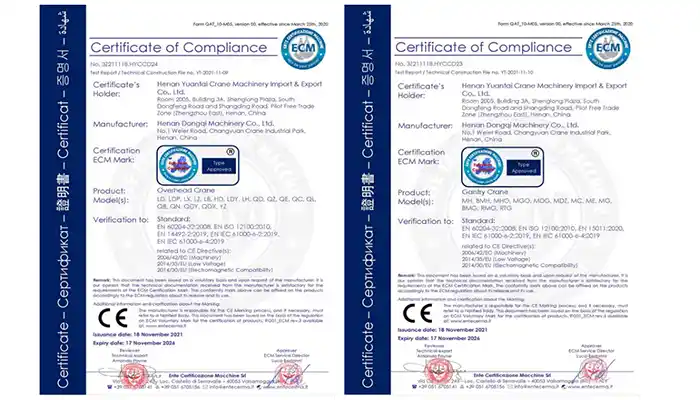
Is CE Certification Enough for Cranes in Indonesia? Buyers’ Guide
Content Quick Link
Is CE Certification Enough for Cranes in Indonesia? CE Overhead, Gantry, Jib, and Electric Hoist Buyers' Guide
Key Takeaway:
CE certification alone isn't enough for cranes in Indonesia. While it meets European standards for safety and quality, it doesn't cover local rules in Indonesia.
To ensure your crane is ready for use, you also need to:
- Get SNI certification for legal operation in Indonesia.
- Check electrical compatibility (voltage and frequency) with local systems.
- Follow local safety standards, like operator training and installation.
- Arrange for third-party inspections to ensure the crane meets local conditions.
Conclusion: CE certification is important, but you must also make sure your crane meets Indonesia's local regulations to ensure safety and avoid legal issues.
Introduction: CE Certification and Crane Buyers in Indonesia
When buying cranes in Indonesia, you'll often notice CE certification highlighted in product brochures. CE indicates that a crane meets European safety and quality standards, including structural design, hoist performance, electrical safety, and operator protection.
However, CE certification alone does not guarantee compliance with Indonesian regulations. Local inspections, SNI standards, and environmental conditions can affect whether the crane can operate safely and legally. Buyers must consider both CE and local requirements before making a purchase.
Here's who this guide is for:
CE certification is particularly relevant for these types of cranes:
- CE overhead cranes – used in workshops and industrial production lines for lifting and moving heavy loads along a fixed runway
- CE gantry cranes – mobile cranes suitable for outdoor yards, construction sites, or shipping terminals
- CE jib cranes – smaller cranes mounted on walls or columns for localized lifting
- CE electric hoists – light-duty lifting devices that can be standalone or mounted on cranes
Key points for buyers to consider before purchase:
- CE is EU-focused: The certification reflects European safety rules, not Indonesian legal approval
- Local inspections may be required: SNI certification or authority verification may be mandatory
- Environmental factors matter: High humidity, heat, dust, or salty air in Indonesia can affect crane performance
- Risk reduction: Understanding CE and local standards ensures safe, efficient operations
What CE Certification Means for Cranes
CE certification shows that a crane meets European machinery safety and quality standards. It focuses on structural strength, hoist performance, electrical systems, and operator safety. However, it does not automatically cover local environmental or regulatory conditions in Indonesia.
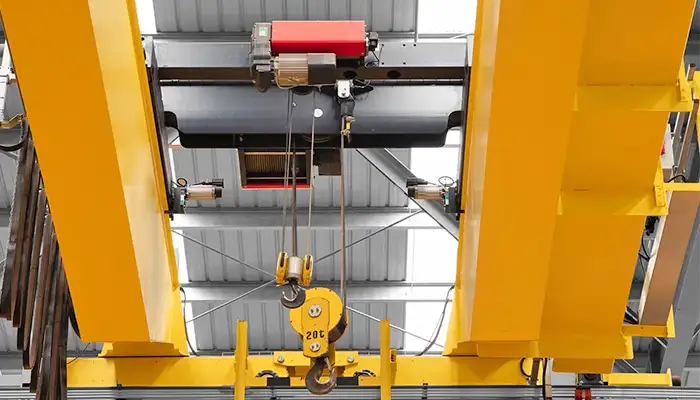 Eurooean style overhead crane, and types of European hoist and cranes
Types of Cranes Covered by CE Certification
Different cranes can carry CE certification, but each has its intended use. Here's a quick overview:
- CE overhead cranes – fixed runway cranes commonly used in workshops and factories
- CE gantry cranes – mobile cranes designed for outdoor use, such as shipping yards or construction sites
- CE jib cranes – column- or wall-mounted cranes for small-area lifting
- CE electric hoists – lightweight lifting devices, either mounted on a crane or used independently
How CE Certification Works
CE certification can be obtained in two main ways. Understanding this helps buyers evaluate the credibility of the certification:
- Manufacturer self-declaration: The crane manufacturer tests the equipment and issues the CE mark themselves
- Third-party verification: An independent organization tests and confirms compliance, adding extra assurance
Practical Benefits of CE Certification
CE certification provides confidence, but it is only one part of compliance. Here's what it offers:
- European crane standards compliance: Shows the crane meets EU safety and design rules
- Mechanical and electrical safety: Confirms the crane is tested for operator safety and structural integrity
- International credibility: Useful for import, resale, and supplier trust
- Baseline safety assurance: While CE provides assurance, local inspections and adjustments may still be needed
Regulatory Requirements for Cranes in Indonesia
Buying a crane for use in Indonesia involves more than just looking at CE certification. Local laws, standards, and inspection requirements must also be considered. Understanding these rules helps ensure your crane can operate safely, legally, and without delays.
Local Safety Regulations
Indonesia's Ministry of Manpower and Transmigration sets rules for crane operation and worker safety. These regulations cover how cranes should be installed, maintained, and operated in factories, workshops, and construction sites. Compliance ensures your workplace meets national safety standards and helps protect operators and other personnel.
Key points to know:
- Cranes must follow approved installation and operational procedures
- Operators should be trained and certified according to Indonesian regulations
- Regular maintenance and safety inspections are mandatory
SNI Certification Requirements
The Standar Nasional Indonesia (SNI) is Indonesia's national standard for industrial equipment. Even if a crane has CE certification, it may still require SNI approval to be legally used in the country. SNI ensures that imported cranes are suitable for local conditions, including environmental factors and power supply differences.
Important considerations:
- SNI certification may be required for CE overhead cranes, CE gantry cranes, CE jib cranes, and CE electric hoists
- SNI verification often includes documentation review, technical inspection, and testing
- Some cranes may require modifications or local adaptation to meet SNI standards
Mandatory Inspection and Testing
Imported cranes often need inspection and testing before they can operate in Indonesia. This ensures that the crane functions correctly under local conditions and complies with safety regulations.
Typical inspection steps:
- Structural and mechanical checks to verify crane integrity
- Load testing for lifting capacity
- Electrical system verification to match local voltage and frequency
- Safety device testing (emergency stop, limit switches, overload protection)
Differences Between CE Compliance and Indonesian Obligations
While CE certification proves compliance with European crane standards, it does not automatically satisfy Indonesian laws. CE focuses on European conditions, whereas Indonesia has specific requirements for safety, electrical compatibility, and environmental adaptation.
Points of difference:
- CE does not consider local temperature, humidity, or dust conditions
- Voltage, power supply, and electrical components may need modification
- CE does not replace SNI or mandatory local inspections
Limitations of CE Certification in Indonesia
While CE certification is important, it is primarily designed for European conditions. For crane buyers in Indonesia, it has several limitations that must be considered to ensure safe and legal operation.
Local Environmental Conditions
CE certification does not always account for Indonesia's climate. High humidity, heat, dust, or salty air can affect crane performance, corrosion resistance, and electrical components. Buyers need to evaluate whether the crane is suitable for these conditions or requires protective modifications.
Key environmental considerations:
- Moisture and humidity may damage electrical parts or hoist motors
- Dust or sand in workshops or outdoor yards can increase wear on moving parts
- High temperature can affect crane lubrication and mechanical stability
Power Supply and Voltage Differences
CE cranes are designed for European voltage and frequency standards, which may not match Indonesia's electrical system. Using a crane without proper adaptation can lead to malfunctions, safety hazards, or damage to equipment.
Points to check:
- Voltage compatibility (e.g., 220V, 380V, 415V)
- Frequency differences (50 Hz in Indonesia vs. European standards)
- Electrical components and control systems suitability
Local Operational Safety Practices
CE certification does not guarantee compliance with Indonesian workplace safety standards or operational practices. Local regulations may require additional training, safety procedures, or operational limits that differ from European guidelines.
Examples:
- Operator certification and training requirements
- Specific lifting and movement protocols for workshops or yards
- Emergency procedures and safety signage compliance
CE Certification Does Not Replace Local Approval
Even if a crane is CE-certified, it may still require inspection and approval from Indonesian authorities or insurance companies. Local inspection ensures the crane meets legal requirements and performs safely under local conditions.
Practical examples:
- Load testing to confirm actual lifting capacity
- Verification of crane installation on site according to Indonesian standards
- Safety device checks (limit switches, emergency stops, overload protection)
Additional Certifications and Approvals to Consider
Even with CE certification, crane buyers in Indonesia often need additional approvals to ensure legal and safe operation. Understanding these certifications helps you avoid delays, extra costs, or non-compliance issues.
SNI Certification
The Standar Nasional Indonesia (SNI) is the national standard for industrial equipment. SNI certification may be mandatory for imported cranes, including CE overhead cranes, CE gantry cranes, CE jib cranes, and CE electric hoists. It ensures the crane is suitable for local conditions, electrical systems, and safety requirements.
Key points for buyers:
- Confirms compliance with Indonesian industrial safety and electrical standards
- Often required for insurance, licensing, and legal operation
- May include documentation review, technical inspection, and on-site verification
Third-Party Inspection in Indonesia
Independent inspection in Indonesia is highly recommended, even for CE-certified cranes. Third-party inspection provides assurance that the crane meets local legal requirements and functions safely under Indonesian conditions.
Typical inspection checks:
- Structural integrity and mechanical components
- Electrical system compatibility and safety
- Load testing according to local lifting requirements
- Verification of safety devices such as emergency stops and limit switches
ISO and Other International Certifications
ISO or other global certifications demonstrate quality management, manufacturing standards, and consistency. However, they do not replace SNI or local authority approvals. They are valuable for supplier credibility but should be seen as a complement, not a substitute.
Considerations:
- ISO 9001 ensures manufacturing quality and process control
- ISO 14001 covers environmental management in production
- Helps build confidence in suppliers and long-term reliability
Case Study: CE Cranes With and Without SNI
Imagine importing a CE overhead crane into Indonesia:
- With SNI approval: The crane passes inspection, meets local safety and electrical standards, and can operate immediately.
- Without SNI approval: Additional inspection, modification, or approval may be required, causing delays and extra costs.
Practical Considerations for Buyers
When importing or purchasing cranes for use in Indonesia, practical evaluation is just as important as certifications. Even with CE or SNI approval, buyers need to make sure the crane is suitable for local conditions, safe for operators, and compatible with electrical and operational requirements.
Evaluating Suppliers
Choosing the right supplier can save time, cost, and risk. Look for suppliers who:
- Offer CE overhead cranes, CE gantry cranes, CE jib cranes, and CE electric hoists with clear documentation
- Have experience exporting to Indonesia and understand local safety requirements
- Provide support for installation, testing, and after-sales service
Compliance Checklist
Before purchasing, use a checklist to confirm compliance:
- CE certification: Confirms the crane meets European safety standards
- SNI approval: Ensures legal operation and suitability for Indonesian conditions
- Local installation standards: Runway, foundation, and workshop preparation meet requirements
- Power compatibility: Voltage, frequency, and electrical components match local supply
Recommendations for Due Diligence
To reduce risk and ensure smooth operation:
- Factory audits: Visit or verify the manufacturer's production process and quality control
- Documentation review: Check CE, SNI, and technical certificates, as well as load testing records
- Consultation with local authorities: Confirm installation, licensing, and inspection requirements in Indonesia
Conclusion
CE certification is an important mark of safety and quality, but it is not enough on its own for operating cranes in Indonesia. Local regulations, inspections, and environmental conditions require additional attention to ensure your crane works safely and legally.
For crane buyers, the best approach is to combine CE certification with local compliance:
- SNI approval ensures the crane meets Indonesian industrial and electrical standards
- Local inspections verify proper installation, safety devices, and load performance
- Experienced suppliers can guide you through documentation, adaptations, and regulatory requirements
Practical takeaway: Always verify both international and local certifications before purchase. Choosing a supplier familiar with Indonesian standards can save time, prevent fines, and ensure safe operation.
Get Your Tailored Solutions
If you are planning to buy CE overhead cranes, CE gantry cranes, CE jib cranes, or CE electric hoists for use in Indonesia, taking the right steps early can save time, reduce costs, and ensure safe operation. Expert guidance helps you navigate CE certification, SNI approval, and local compliance requirements.
How We Can Help Buyers
- Consultation services: Get advice on CE crane compliance, local regulations, and installation requirements in Indonesia
- Inspection and certification support: Assistance with SNI verification, local inspections, and load testing
- Sourcing guidance: Connect with reliable suppliers experienced in delivering CE-certified cranes adapted for Indonesian conditions
- Operational support: Recommendations for installation, operator training, and maintenance best practices

Article by Bella ,who has been in the hoist and crane field since 2016. Bella provides overhead crane & gantry crane consultation services for clients who need a customized overhead travelling crane solution.Contact her to get free consultation.
Yuantai Cranes
Overhead Crane Manufacturer with CE, ISO, SGS, CNEX Certificates.
- Main Specifications - Capacity: 0.5–550 tons | Span: up to 40m | Speed: 0.8–12 m/min | Duty: A3–A7 | Power: 380–690V, 50/60Hz | Control: pendant/remote/cabin
- Full engineering: FEA/PLC/VFD + in-house build + global delivery + on-site support, for workshops, factories, EPC contractors, industrial projects, etc.
- Support: design, manufacturing, testing, service – end-to-end, customized lifting solutions worldwide.
How to Get an Accurate Crane Price for Your Application?
Tips: Copy the spec list, fill in your details, and paste it into the form on the right/ down-below for a quick price.
- Crane type:_____ . (e.g., overhead crane, gantry crane, jib crane)
- Max weight to lift:_____ tons. (e.g., 2t, 5t, 10t, 20t, 50t)
- Lifting height:_____ m. (How high does the hook need to reach?
- Workshop width (span):_____ m . (Distance between the two crane rails)
- Travel distance:_____ m . (How long does the crane need to move along the runway?)
- Control type:_____. (Pendant / remote / cabin Control)
- Power supply:_____. (Local voltage & frequency – e.g., 380V, 50Hz, 3-phase)
- What will it be used for?_____ (e.g., steel fabrication, concrete products, mold handling, general manufacturing, etc.)
- Any special requirements?_____ (e.g., extreme temperature, dusty or explosive environment, special paint color, etc.)
Just leave a message via the contact form and our hoist and crane engineer will contact you with in 24working hours.
Get Your Custom Quote–Quick & Easy
Fill in what you know. Skip what you don't – we'll help.Any question will be reply with 24 working hours