VFD Overhead EOT Cranes for Smooth & Safe Lifting
Content Quick Link
VFD Overhead EOT Cranes – Efficient Lifting for Industrial Applications
Most Important Takeaway:
A VFD-controlled overhead EOT crane delivers precise, smooth, and safe lifting for industrial operations while extending the life of hoists, brakes, and mechanical components. Buyers achieve reliable productivity, repeatable positioning, and lower long-term maintenance costs.
Key Takeaways – What This Guide Solves for Buyers
- Smooth and Precise Motion: VFD control ensures hoist, trolley, and bridge movements are gradual, accurate, and jerk-free, solving positioning and material handling errors.
- Reduced Mechanical Wear: By managing acceleration and deceleration electronically, brake and motor wear is minimized, lowering maintenance costs.
- Versatile Industrial Applications: Ideal for production lines, machine workshops, warehouses, and assembly facilities, addressing diverse material handling needs.
- Capacity Flexibility: From light-duty 1–20 ton cranes to heavy-duty 50-ton cranes, VFD overhead EOT cranes can be tailored to industrial requirements.
- Adaptable Configurations: Single or double girder, top-running or under-running setups, and VFD-enabled hoists offer buyers flexibility for different facility layouts.
- Reliable Load Handling: Capable of lifting steel plates, molds, pallets, and machinery parts safely, ensuring stable and repeatable operations.
- Energy Efficiency & Safety: VFD systems allow controlled power usage and smooth stops, reducing energy waste and improving operator safety.
Introduction
Overhead EOT (Electric Overhead Traveling) cranes have been a backbone of industrial lifting for decades. They span factory floors, warehouses, and workshops, moving everything from steel plates to machinery parts with efficiency. Traditionally, these cranes relied on fixed-speed motors and mechanical controls. While functional, older systems often caused jerky starts and stops, inconsistent load handling, and extra wear on brakes and hoists. Over time, these issues can slow down production, increase maintenance costs, and even create safety concerns.
Enter the variable frequency drive, or VFD. A VFD controls the speed of the crane's motors electronically, giving operators smooth, precise motion for the hoist, trolley, and bridge. That means you can lift and position loads without sudden jerks or swings. It also reduces strain on mechanical components, extending the life of your crane. In simple terms, a VFD upgrade turns a standard overhead crane into a more reliable, controllable tool for everyday industrial lifting.
Why VFDs Matter for Industrial Lifting
- Smooth Acceleration and Deceleration: Prevents sudden jolts that can damage loads or the crane itself.
- Consistent Speed Under Load: Keeps heavy or unevenly distributed loads moving steadily.
- Lower Mechanical Wear: Brakes, hoists, and motors experience less stress, which means less downtime and lower repair costs.
- Improved Safety: Operators can position heavy loads precisely, reducing the risk of accidents.
- Energy Efficiency: VFDs adjust motor power based on load, which can cut energy consumption over time.
Who Benefits Most
- Factory Managers: Can maintain steady production with minimal interruptions.
- Warehouse Supervisors: Improve the handling of pallets, containers, and heavy goods safely and efficiently.
- Machine Assembly Engineers: Achieve precise positioning for complex assembly tasks.
- Industrial Equipment Buyers: Make informed decisions about upgrading or purchasing new cranes with long-term reliability in mind.
In short, whether you're handling light-duty parts or heavy industrial loads, VFD-controlled overhead cranes give you more control, better safety, and less maintenance headaches. This isn't just a technical upgrade; it's a practical step toward smoother, more reliable material handling on the shop floor.
Typical Capacities and Configurations of VFD Overhead EOT Cranes
Selecting the right capacity and configuration for a VFD overhead EOT crane is not just about lifting weight—it's about efficiency, safety, and longevity. The right combination of crane type, capacity, and hoist ensures smooth operation, precise positioning, and reduced maintenance costs.
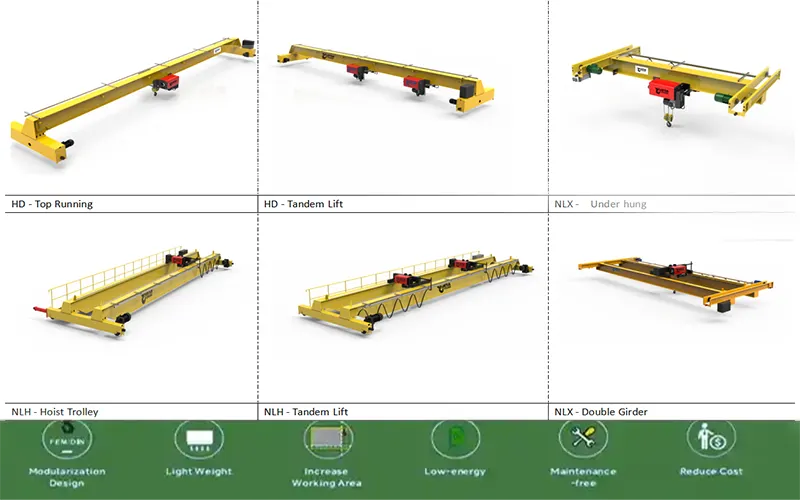
The bridge type and running system affect load capacity, travel height, and installation feasibility. Choosing the right configuration ensures the crane fits both your space and lifting needs.
Different applications require different lifting capacities. Understanding your load type, frequency, and operational environment will help you choose the most suitable VFD EOT crane.
Light to Medium Duty: 1–20 tons
These cranes are ideal for everyday factory operations, assembly workshops, and warehouse handling. They handle molds, pallets, machine parts, and lighter bulk materials with smooth and controlled motion.
- Efficient for repeated lifting without stressing brakes or hoists
- Suitable for smaller spans and lighter structural requirements
- Works well in production lines, machine assembly, and storage facilities
Heavy Industry: Up to 50 tons
For steel mills, heavy fabrication, and large equipment handling, higher capacity cranes maintain stability and safety under very heavy loads.
- Handles steel plates, industrial molds, and heavy machinery with ease
- Reduces mechanical shock and prolongs component lifespan
- Suitable for large-span bridges and top-running crane setups
Single Girder Bridges
Single girder EOT cranes are a simple, cost-effective solution for light to medium loads. They are easy to install and maintain while providing reliable operation.
- Ideal for smaller spans and lighter industrial loads
- Efficient for warehouses, production lines, and storage operations
- Lower installation and maintenance costs
Double Girder Bridges
Double girder EOT cranes are stronger and more stable, making them suitable for heavy or wide loads. They support higher lifting heights and longer spans.
- Recommended for heavy machinery, steel plates, and industrial fabrication
- Provides better load stability and reduces bridge deflection
- Supports heavier hoists for precision lifting
Top-Running Rails
Top-running EOT cranes travel on rails mounted above the runway, offering maximum lifting height and capacity.
- Ideal for heavy-duty operations and high-ceiling facilities
- Supports heavier loads safely and reliably
- Common in steel mills, fabrication shops, and large warehouses
Under-Running Rails
Under-running EOT cranes are suspended from the building structure, suitable for facilities with limited headroom.
- Good for low-ceiling warehouses or workshops
- Provides flexibility in retrofit projects
- Handles moderate to heavy loads with smooth VFD operation
Hoist Options
The hoist type determines how smoothly and safely loads are lifted. VFD-controlled hoists improve precision, reduce wear, and allow customization for specific applications.
Standard VFD Hoists
These hoists provide smooth start, stop, and motion for most light to medium lifting applications.
- Reduces load swing and stress on crane components
- Easy to operate and maintain
- Suitable for production lines, storage, and light assembly work
Customizable Hoists
For more demanding applications, adjustable VFD hoists allow precise control of speed and load handling.
- Handles heavy or uneven loads safely
- Supports incremental positioning for assembly and fabrication tasks
- Enhances productivity in heavy industrial operations
Choosing the right capacity, crane type, and hoist configuration is essential for efficient, safe, and long-lasting crane operation. Single girder cranes are perfect for light loads, while double girder cranes handle heavy or wide items. Top-running cranes maximize height and capacity, whereas under-running cranes suit low-ceiling spaces. Finally, VFD hoists ensure smooth, precise lifting for any load, reducing maintenance and improving operator safety.
How VFD Improves Crane Performance
Variable frequency drives (VFDs) completely change how overhead EOT cranes move. Instead of sudden starts and stops, the crane responds smoothly to operator commands. This matters not just for efficiency, but also for safety and the long-term health of your crane.
Controlled Acceleration & Deceleration
Starting or stopping a crane abruptly can make even light loads swing. Over time, that movement stresses motors, brakes, and the crane's structure. With a VFD, acceleration and deceleration are gradual. The load stays steady, operators can place it precisely, and mechanical parts last longer.
- Minimizes load swing and potential damage
- Protects hoist gears and trolley wheels from sudden shocks
- Improves positioning accuracy for delicate or uneven loads
Stable Speed Under Load
Not every load is the same. Heavy machinery parts or stacked pallets can affect motor performance in older cranes. VFDs automatically adjust motor speed to match the weight of the load. This keeps lifting and bridge movement consistent, no matter what you're handling.
- Maintains steady motion even with uneven or heavy loads
- Reduces cycle times for repetitive lifting operations
- Makes operators' work easier and safer
Reduced Shock to Hoists and Brakes
Mechanical brakes and hoists take a beating on standard cranes. Frequent jolts and stops lead to worn-out components and higher maintenance costs. VFDs handle most deceleration electronically, so mechanical parts are only used for holding or emergency stops.
- Extends the life of brakes, hoists, and gearboxes
- Cuts down on unplanned downtime
- Reduces replacement and repair expenses
Energy Savings
A VFD doesn't just smooth motion—it saves electricity too. It adjusts the motor's power to the actual load. Less wasted energy, lower bills, and reduced motor heat are immediate benefits.
- Reduces peak current draw during lifting cycles
- Lowers energy consumption for frequent operations
- Supports more sustainable, cost-effective industrial workflows
Typical Industrial Applications for VFD Overhead EOT Cranes
Variable frequency drive (VFD) overhead EOT cranes are not just faster or smoother—they give operators better control over heavy lifting while extending the life of crane components. These cranes are highly versatile, suitable for a variety of industrial environments. Below we break down the most common applications, suggested crane types, and typical capacities.
Factory Production Lines
Production lines often require repeated lifting and precise placement of molds, dies, and assembly components. A top-running or under-running single girder EOT crane is usually ideal for light to medium loads.
- Suggested Crane Type: Single girder EOT crane with VFD hoist
- Typical Capacity: 1–10 tons for most production lines; 15–20 tons for heavier machinery
Practical Benefits:
- Smooth, controlled lifting prevents damage to delicate molds or components
- Stable travel along the bridge ensures accurate placement at assembly stations
- Reduces cycle time for repetitive handling without stressing motors or brakes
Warehouses & Storage Facilities
Warehouses demand careful handling of pallets, containers, and bulk materials. A double girder EOT crane is often recommended for heavier or wider loads, while a single girder may suffice for smaller storage operations.
- Suggested Crane Type: Single or double girder top-running EOT crane
- Typical Capacity: 1–20 tons for standard warehouse loads; up to 25 tons for bulk storage
Practical Benefits:
- Gradual acceleration and deceleration prevent load swing and improve stacking accuracy
- Smooth trolley travel supports safe handling of uneven or bulky loads
- VFD control ensures energy-efficient operation during frequent lifting cycles
Machine Assembly Workshops
In workshops where large machinery is assembled, cranes must provide precise positioning. A double girder EOT crane with a heavy-duty VFD hoist is often best for moving components safely and accurately.
- Suggested Crane Type: Double girder EOT crane with VFD hoist
- Typical Capacity: 10–20 tons for medium machinery; up to 30 tons for heavy equipment
Practical Benefits:
- Allows operators to make incremental movements for exact placement
- Reduces risk of component damage during installation
- Supports assembly of complex machinery with multiple lifts
Heavy Industry Operations
Steel mills, large fabrication workshops, and equipment manufacturing often require extremely high lifting capacities. A top-running double girder EOT crane or under-running crane with reinforced VFD hoists is recommended.
- Suggested Crane Type: Double girder top-running EOT crane with heavy-duty VFD hoist
- Typical Capacity: 20–50 tons for steel plates, molds, and industrial machinery
Practical Benefits:
- Maintains smooth, stable motion even under very heavy loads
- Reduces mechanical shock to bridge, hoist, and brakes
- Improves safety when handling large, uneven, or bulky industrial items
Key Takeaways
- VFD overhead EOT cranes can be tailored to the load, space, and workflow requirements of each industrial application.
- Single girder cranes are efficient for light to medium loads, while double girder cranes provide the strength and stability for heavier or wide loads.
- Capacities vary widely—from 1 ton for small workshops up to 50 tons for heavy industrial operations—but VFD control ensures smooth, safe operation across all ranges.
- Choosing the right type of EOT crane with VFD control ensures smooth operations, long-term reliability, and reduced maintenance costs.
Loads Commonly Handled by VFD Overhead EOT Cranes
Understanding the types of loads your crane will handle is critical for selecting the right capacity, hoist, and bridge configuration. Different materials require different lifting strategies, and VFD overhead EOT cranes make it possible to move each type safely and efficiently.
Steel Plates and Slabs
Steel plates and slabs are heavy and often irregular in size and weight. Handling them safely requires a stable crane with sufficient lifting capacity.
- Suggested Crane Type: Double girder top-running EOT crane with reinforced VFD hoist
- Typical Capacity: 10–50 tons, depending on plate size and thickness
- Provides smooth acceleration and deceleration to prevent load swing
- Handles large and heavy sheets safely with minimal mechanical stress
- Ideal for steel mills, fabrication shops, and industrial warehouses
Machinery Parts and Components
Large machinery components need precise positioning during lifting and installation. Controlled, smooth motion from a VFD EOT crane ensures safe handling.
- Suggested Crane Type: Single or double girder EOT crane, top-running or under-running depending on workshop height
- Typical Capacity: 5–30 tons depending on component size and weight
- Smooth and stable motion reduces the risk of damage
- Allows exact placement for assembly or installation tasks
- Works for production lines, machine workshops, and assembly facilities
Pallets and Bulk Goods
Warehouses often move stacked pallets or bulk goods repeatedly. Frequent lifts require cranes that operate smoothly and reliably.
- Suggested Crane Type: Single girder EOT crane for light to medium loads; double girder for heavy or wide pallets
- Typical Capacity: 1–20 tons for light/medium pallets; up to 25 tons for bulk or heavy items
- Gradual starts and stops prevent load tipping or shifting
- Reduces wear on brakes and hoists during repeated cycles
- Improves operator control and safety when handling uneven or bulky loads
Molds and Production Dies
Molds and dies are expensive and often delicate. Precise placement and controlled lifting are essential to avoid damage.
- Suggested Crane Type: Single or double girder top-running EOT crane with VFD hoist
- Typical Capacity: 1–15 tons for small molds; 10–20 tons for larger dies
- Smooth motion prevents impact or misalignment
- Supports repeatable, accurate placement for production lines and workshops
- Minimizes wear on hoists and mechanical components over repeated cycles
Handling Note
Always ensure the crane's rated capacity exceeds the maximum load plus a safety margin. Repeated lifting, uneven weight distribution, and varying load sizes can increase stress on hoists and brakes. Proper capacity planning ensures safety, reduces maintenance, and extends the life of your VFD overhead EOT crane.
Frequently Asked Questions / Buyer Concerns
When considering a VFD overhead EOT crane, buyers often have questions about compatibility, performance, and costs. Understanding these points helps ensure a smooth upgrade or new installation without surprises.
Will my existing crane motors work with VFDs?
Not all standard motors are compatible with VFD operation. Most modern VFD systems require inverter-rated motors to ensure safe and precise performance. In some cases, your existing motors may need rewiring or replacement to fully take advantage of smooth acceleration, controlled speed, and reduced wear.
- Ensures your crane can handle smooth hoist, trolley, and bridge motion
- Prevents overheating or reduced motor lifespan
- Essential for accurate positioning and long-term reliability
How much will a VFD reduce wear on brakes?
Traditional cranes rely on mechanical brakes for every stop, which accelerates wear. VFD overhead EOT cranes handle most deceleration electronically, so the brakes are mainly used for holding or emergency stops.
- Extends brake lifespan significantly
- Reduces maintenance downtime and repair costs
- Supports safer, smoother operations over repeated lifting cycles
Can VFDs handle heavy or uneven loads safely?
Yes. Modern VFDs automatically adjust motor speed to match the load weight, keeping lifting and bridge movement stable. This prevents jerks, load swing, and potential damage.
- Maintains smooth, consistent motion for steel plates, machinery parts, and pallets
- Improves operator confidence and placement accuracy
- Reduces stress on hoists, bridge girders, and mechanical components
Do I need a special control panel or wiring?
Integration of a VFD system is usually straightforward, but proper VFD-compatible wiring and controls are critical. Incorrect installation can compromise performance and safety.
- Ensures smooth operation of hoist, trolley, and bridge
- Supports programmable speed control for different load types
- Can be integrated with existing EOT crane control systems when planned carefully
Are VFD cranes energy-efficient?
Absolutely. VFDs adjust motor output based on load, reducing peak power draw and lowering overall energy consumption.
- Cuts electricity costs during frequent lifting cycles
- Reduces heat and stress on motors, extending lifespan
- Supports sustainable operations without sacrificing performance
Will the upgrade disrupt production?
Upgrading to a VFD overhead EOT crane can be done in stages. With proper planning, downtime is minimized, and production can continue while parts of the crane are retrofitted.
- Allows phased installation without halting the facility
- Reduces impact on workflow and project timelines
- Ensures operators can continue to handle critical loads safely
Conclusion
Upgrading to a VFD overhead EOT crane is more than just a technical improvement—it's a practical investment in efficiency, safety, and reliability. These cranes deliver smooth, controlled motion for the hoist, trolley, and bridge, making repetitive lifting safer and more precise.
- Reduces wear on brakes, hoists, and structural components, lowering maintenance costs
- Maintains stable speed and load control, even with heavy or uneven items
- Supports a wide range of capacities, from light 1-ton loads to heavy 50-ton machinery or steel plates
- Enhances operator safety and workflow efficiency across production lines, warehouses, workshops, and heavy industry operations
Whether you're handling delicate molds or bulky steel slabs, a VFD EOT crane ensures accurate placement, consistent performance, and longer service life. In short, it's a reliable, cost-effective solution that keeps industrial lifting operations running smoothly day after day.

Article by Bella ,who has been in the hoist and crane field since 2016. Bella provides overhead crane & gantry crane consultation services for clients who need a customized overhead travelling crane solution.Contact her to get free consultation.
Yuantai Cranes
Overhead Crane Manufacturer with CE, ISO, SGS, CNEX Certificates.
- Main Specifications - Capacity: 0.5–550 tons | Span: up to 40m | Speed: 0.8–12 m/min | Duty: A3–A7 | Power: 380–690V, 50/60Hz | Control: pendant/remote/cabin
- Full engineering: FEA/PLC/VFD + in-house build + global delivery + on-site support, for workshops, factories, EPC contractors, industrial projects, etc.
- Support: design, manufacturing, testing, service – end-to-end, customized lifting solutions worldwide.
How to Get an Accurate Crane Price for Your Application?
Tips: Copy the spec list, fill in your details, and paste it into the form on the right/ down-below for a quick price.
- Crane type:_____ . (e.g., overhead crane, gantry crane, jib crane)
- Max weight to lift:_____ tons. (e.g., 2t, 5t, 10t, 20t, 50t)
- Lifting height:_____ m. (How high does the hook need to reach?
- Workshop width (span):_____ m . (Distance between the two crane rails)
- Travel distance:_____ m . (How long does the crane need to move along the runway?)
- Control type:_____. (Pendant / remote / cabin Control)
- Power supply:_____. (Local voltage & frequency – e.g., 380V, 50Hz, 3-phase)
- What will it be used for?_____ (e.g., steel fabrication, concrete products, mold handling, general manufacturing, etc.)
- Any special requirements?_____ (e.g., extreme temperature, dusty or explosive environment, special paint color, etc.)
Just leave a message via the contact form and our hoist and crane engineer will contact you with in 24working hours.
Get Your Custom Quote–Quick & Easy
Fill in what you know. Skip what you don't – we'll help.Any question will be reply with 24 working hours