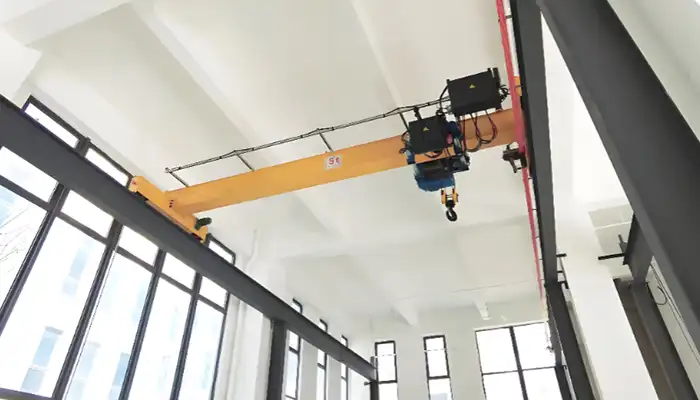
Freestanding Overhead Cranes for Corbel-Free Concrete Workshops
Content Quick Link
Freestanding Overhead Crane Solutions for Corbel-Free Concrete Workshops
Most Important Takeaway
If a concrete workshop has no crane corbels, a freestanding overhead crane system allows safe crane installation by transferring all crane loads directly to independent columns and foundations, avoiding structural rework to walls or roofs.
- Corbel-free buildings can still support overhead cranes without rebuilding the structure
- Freestanding systems isolate crane loads from existing concrete walls
- Column and foundation design is driven by crane capacity, span, and duty class
- Lifting height limitations often determine whether a single or double girder crane is required
- Early coordination between crane supplier and civil engineer prevents costly redesign
Why Corbel-Free Workshops Require Special Crane Solutions
Concrete workshops without crane corbels were simply not built to carry overhead crane loads. This is common in older factories, storage buildings, and workshops that later upgraded their production process. The building looks solid, but structurally, it was designed only to carry its own weight, plus basic service loads. That difference matters more than many buyers expect.
Structural limits of walls and roofs
In a typical corbel-supported workshop, the crane load is transferred through brackets into reinforced columns and then down to the foundation. Without corbels, that load path does not exist.
In corbel-free buildings, the walls and roof usually face several constraints:
- Wall columns are designed for vertical loads, not moving crane loads
- Roof beams are sized for roofing and lighting, not lifting operations
- Dynamic forces from crane travel and trolley movement were never considered
- Concrete reinforcement layout often lacks the anchoring required for crane rails
Trying to install crane rails directly on walls or roof beams often leads to overstressed concrete. Cracks may appear slowly. Sometimes nothing seems wrong at first. That's the dangerous part.
From an engineering point of view, the structure has no proper way to absorb horizontal forces or impact loads from lifting and braking. Over time, fatigue damage becomes unavoidable.
Risks of improper crane installation
Improper crane installation in a corbel-free workshop is not just a design flaw. It is a long-term operational risk.
Common problems seen in real projects include:
- Cracking at column edges where rails are anchored
- Uneven crane travel caused by structural deflection
- Rail misalignment after months of operation
- Reduced crane service life due to structural movement
- Safety risks during full-load lifting
In some cases, workshops are forced to stop crane operation entirely after inspections. Fixing the issue later usually costs more than doing it correctly from the start.
How Freestanding Overhead Cranes Work
In workshops without crane corbels, the crane cannot rely on the building to support its weight. That's where freestanding overhead cranes come in. These systems are completely self-supporting and transfer all loads safely to the ground.
Independent Columns and Runway Beams
The backbone of a freestanding crane system is its columns. These vertical supports are engineered to carry:
- The weight of the crane itself
- The maximum load lifted by the hoist
- Dynamic forces from movement, braking, or acceleration
The runway beams sit on top of these columns, creating a track for the crane bridge. Key points for buyers:
- Column spacing depends on crane span, building layout, and load requirements
- Columns are typically steel structures, bolted or welded to foundations
- Runway beams can be single or double girder, depending on lifting height and capacity
- Foundations must handle vertical and horizontal forces, including braking and impact loads
Direct Load Transfer to Foundations
The main advantage of a freestanding system is that all loads go directly into the ground, not the building. This makes it a practical solution for workshops where modifying walls or roofs is not feasible.
Benefits buyers should consider:
- No dependence on existing walls or roof, which may be weak or under-reinforced
- Dynamic forces from crane operation are fully absorbed by the columns and foundations
- Future expansion or heavier crane loads can be planned by slightly overbuilding the columns
- Independent structure simplifies inspection, maintenance, and adjustments
Freestanding cranes offer flexibility and safety. You can adjust spans, hook heights, or beam layouts without touching the building structure, making them ideal for corbel-free concrete workshops.
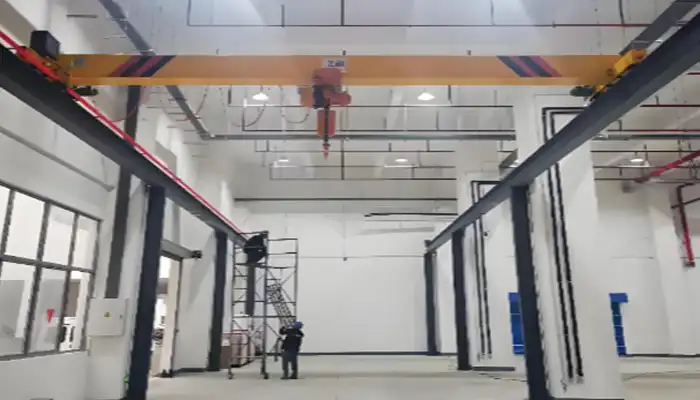 freestanding bridge crane for conceret workshop without supporting structrued
Designing Columns and Runway Beams
When planning a freestanding overhead crane system, the columns and runway beams are the heart of the design. Getting them right ensures safety, reliable operation, and long-term performance. Mistakes here can lead to costly repairs or operational problems.
Impact of Crane Weight and Span
Every crane exerts vertical and horizontal forces on the columns and beams. These forces come from:
- Crane self-weight (bridge, trolley, and hoist)
- Maximum lifted load plus safety margin
- Dynamic forces, such as acceleration, braking, and sudden stops
- Wind or lateral impacts, especially in outdoor or semi-open workshops
The span—the distance between the columns—directly affects the size of beams needed. A wider span means the runway beam must be stronger and stiffer to avoid sagging or deflection.
Practical points for buyers:
- Overestimating beam strength increases cost unnecessarily
- Underestimating can cause misalignment, uneven crane travel, or structural stress
- Foundation design must also reflect the total combined load of crane and lifting operations
Importance of Column Spacing
Column spacing is not just a structural decision—it affects crane performance, operational safety, and cost.
Key considerations:
- Crane span vs column distance: Columns must be close enough to support the runway beams safely, but not so close that crane movement or material handling is restricted
- Load distribution: Each column carries a portion of the total crane load. Proper spacing prevents overloading any single column or foundation
- Workshop layout: Columns should align with building bays, production areas, and lifting paths for smooth operation
- Future flexibility: Slightly wider spans or additional columns can allow higher capacity cranes later
Other practical tips:
- Columns are usually structural steel, anchored to concrete foundations designed to resist tipping and vibrations
- Runway beams should be checked for deflection limits, ensuring the crane bridge moves smoothly under full load
- Collaboration between the crane supplier and civil engineer is crucial to match column design with lifting requirements
Solving Lifting Height Challenges
Limited lifting height is one of the biggest challenges in corbel-free concrete workshops. The building itself often restricts how high your crane hook can go. Without proper planning, you could struggle to lift materials safely or spend extra on a crane that doesn't fit the space.
Choosing Between Single Girder and Hoist Double Girder Cranes
The type of crane you choose has a direct impact on how much lifting height is available. Each option has its own advantages and limitations:
Single girder overhead cranes:
- These are simpler and more cost-effective.
- Suitable for light to medium loads.
- Hook height is limited because the trolley rides on top of the beam.
Hoist double girder overhead cranes:
- Two parallel beams carry the hoist traveling between them.
- Maximizes hook height, which is critical in low-headroom buildings.
- Can handle heavier loads and longer spans.
- Slightly higher cost but often necessary when building height is restricted.
Buyer tip: For most corbel-free workshops, a hoist double girder crane is preferred if you need to lift taller items or make full use of the building height.
Optimizing Hook Height
Even in buildings with limited height, there are ways to maximize lifting clearance. Careful planning can help your crane operate efficiently and safely:
- Measure clear building height and account for roof beams, lighting, or other obstacles.
- Choose the crane type based on available vertical space.
- Consider low-headroom hoists, which reduce the distance between the hook and the beam.
- Include safety and maintenance clearance.
- Ensure the crane can handle the size of the materials being lifted.
Additional practical tips:
- Slightly taller columns in a freestanding system can increase hook height without altering the building.
- Double girder systems with low-headroom trolleys can provide 2–3 meters more lifting clearance than single girder cranes.
- Always verify both lifting height and load path with the crane supplier before final design.
Installation and Coordination
Installing a freestanding overhead crane is more than just assembling steel beams. It requires careful planning and close coordination between the crane supplier and the civil contractor. Without proper communication, projects can face delays, cost overruns, or even unsafe conditions.
The Crane Supplier's Role
The crane supplier is responsible for delivering a system that fits your lifting needs and functions safely. They are involved at every stage, from design to testing.
Before installation, the supplier typically:
- Reviews the workshop layout, headroom, and foundation drawings
- Recommends the correct crane type (single girder vs double girder) and hoist
- Specifies column sizes, beam types, and crane span based on load requirements
During installation, the supplier:
- Supervises crane assembly to ensure proper installation
- Aligns runway beams and bridge rails for smooth crane movement
- Tests the crane's functions and safety systems
After installation, the supplier:
- Provides operator training and maintenance guidance
- Conducts initial load testing to verify performance
- Delivers compliance and warranty documentation
Tip for buyers: Engage the supplier from the very beginning to avoid misalignment between building preparation and crane design.
The Civil Contractor's Role
The civil contractor makes sure the building and foundation can safely support the freestanding crane. Their work focuses on preparing a stable base and correctly installing structural elements.
Before installation, the civil contractor:
- Prepares reinforced foundations sized for crane loads
- Installs anchor bolts according to the supplier's specifications
- Checks ground level, alignment, and flatness
During installation, the civil contractor:
- Coordinates with the supplier to position columns and beams accurately
- Ensures foundations and columns remain level under crane weight
- Provides temporary bracing if needed
After installation, the civil contractor:
- Inspects concrete and anchoring for cracks or settlement
- Keeps records for long-term structural safety
Tip for buyers: Make communication between supplier and civil contractor a priority. Even small errors, like misplaced anchor bolts or misaligned columns, can affect crane performance and project timelines.
Bottom Line
Smooth installation depends on clear roles and teamwork. When the supplier and civil contractor coordinate from start to finish, the crane is installed safely, operates reliably, and meets your production needs—without costly fixes later.
Freestanding Overhead Crane Solutions for Corbel-Free Concrete Workshops
Frequently asked questions about installing, designing, and operating freestanding overhead cranes in workshops without crane corbels.
Q1: How can an overhead crane be installed in a concrete workshop without corbels?
Even if your workshop has no crane corbels, it's still possible to install a safe overhead crane. The solution is to use a freestanding crane system, where the crane carries its own weight and transfers all loads directly to independent columns and foundations.
- The crane doesn't rely on walls or roof beams for support
- Columns are designed to handle the crane weight plus dynamic lifting forces
- Foundations must be reinforced to accommodate vertical and horizontal loads
- Freestanding systems avoid costly structural modifications
Q2: What is a freestanding overhead crane and how does it work?
A freestanding overhead crane is a self-supporting system that operates independently of the building structure. It consists of vertical columns, runway beams, and a crane bridge. All loads, including hoist weight and lifted materials, are carried through the columns into the foundation.
- Columns are typically steel, anchored to reinforced foundations
- Runway beams span between columns, guiding the crane bridge
- Dynamic loads from travel, braking, and acceleration are absorbed by the structure
- The system can be customized for span, lifting height, and load capacity
Q3: When should buyers choose a freestanding crane instead of wall-supported systems?
Freestanding cranes are the best choice when:
- The building has no corbels or inadequate roof strength
- Structural modification is too costly or disruptive
- Lifting requirements exceed what the existing walls or roof can safely handle
- Future flexibility is needed for heavier loads or longer spans
Tip: In most corbel-free concrete workshops, freestanding cranes are safer and more practical than relying on existing walls.
Q4: How are support columns and runway beams determined?
The design of columns and runway beams depends on crane weight, span, and lifting capacity. Buyers must consider:
- Column spacing to evenly distribute load and avoid overloading foundations
- Beam type (single vs double girder) to handle crane span and dynamic forces
- Foundation size to support vertical and horizontal loads safely
- Future expansion, if higher capacity cranes may be needed later
Practical tip: Work closely with your crane supplier and civil engineer to match beam strength, column placement, and foundation design to your operational needs.
Q5: Why does lifting height often rule out standard single girder cranes?
Single girder cranes are simple and cost-effective but have limited hook height because the trolley sits on top of the beam. In low-headroom workshops, this can reduce the usable lifting height significantly.
- Hoist double girder cranes, which place the hoist between two beams, maximizing hook height
- Low-headroom hoists, designed to reduce the distance from hook to rail
- Slightly taller freestanding columns to gain extra clearance without modifying the building
Tip: Always verify lifting height with the supplier before ordering—small miscalculations can limit your crane's operational efficiency.
Q6: What information must buyers provide for accurate crane design and pricing?
To get an accurate quotation and ensure safe design, buyers should provide:
- Lifting capacity and duty class of the crane
- Building dimensions, headroom, and column layout
- Maximum load dimensions and lifting requirements
- Power supply and operational frequency
- Any future production changes or plans to upgrade the crane
Providing complete, accurate information upfront helps the supplier design a crane system that is safe, reliable, and fully aligned with your workshop conditions.
Conclusion: A Practical and Safe Path Forward
Not having crane corbels doesn't mean you can't install an overhead crane. Many workshops face this challenge, and the good news is that a freestanding overhead crane system provides a safe, reliable solution.
When designed properly, a freestanding crane can deliver:
- Safe lifting capacity for your production needs
- Optimal hook height, even in low-headroom buildings
- Long-term reliability, without costly structural changes
The key takeaway for buyers is to treat the crane as a complete system, not just a piece of equipment. That means coordinating civil engineering, foundation work, and crane design from the very beginning.
With careful planning, collaboration between supplier and contractor, and attention to load and span requirements, you can install a freestanding overhead crane that works efficiently and safely—without major building reconstruction.

Article by Bella ,who has been in the hoist and crane field since 2016. Bella provides overhead crane & gantry crane consultation services for clients who need a customized overhead travelling crane solution.Contact her to get free consultation.
Yuantai Cranes
Overhead Crane Manufacturer with CE, ISO, SGS, CNEX Certificates.
- Main Specifications - Capacity: 0.5–550 tons | Span: up to 40m | Speed: 0.8–12 m/min | Duty: A3–A7 | Power: 380–690V, 50/60Hz | Control: pendant/remote/cabin
- Full engineering: FEA/PLC/VFD + in-house build + global delivery + on-site support, for workshops, factories, EPC contractors, industrial projects, etc.
- Support: design, manufacturing, testing, service – end-to-end, customized lifting solutions worldwide.
How to Get an Accurate Crane Price for Your Application?
Tips: Copy the spec list, fill in your details, and paste it into the form on the right/ down-below for a quick price.
- Crane type:_____ . (e.g., overhead crane, gantry crane, jib crane)
- Max weight to lift:_____ tons. (e.g., 2t, 5t, 10t, 20t, 50t)
- Lifting height:_____ m. (How high does the hook need to reach?
- Workshop width (span):_____ m . (Distance between the two crane rails)
- Travel distance:_____ m . (How long does the crane need to move along the runway?)
- Control type:_____. (Pendant / remote / cabin Control)
- Power supply:_____. (Local voltage & frequency – e.g., 380V, 50Hz, 3-phase)
- What will it be used for?_____ (e.g., steel fabrication, concrete products, mold handling, general manufacturing, etc.)
- Any special requirements?_____ (e.g., extreme temperature, dusty or explosive environment, special paint color, etc.)
Just leave a message via the contact form and our hoist and crane engineer will contact you with in 24working hours.
Get Your Custom Quote–Quick & Easy
Fill in what you know. Skip what you don't – we'll help.Any question will be reply with 24 working hours