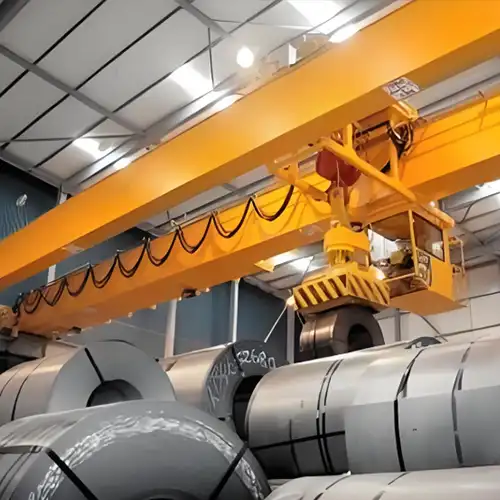
Automatic Overhead Cranes with Electromagnetic for Metal Handling
Automatic electromagnet overhead crane for sale.Smarter & precise electromagnetic overhead cranes for efficient metal handling with automatic design!
| Crane Type | Automatic Electromagnetic Overhead Crane / Automatic Electromagnetic Gantry Crane for Smart Metal Handling, with Automatic Electromagnetic Lifting System / Customized Magnetic Lifter System, ISO A5–A7 / FEM 2m–4m |
| Crane Capacity | 5–100 Ton (Common: 10 Ton, 20 Ton, 32 Ton, 50 Ton, 75 Ton, 100 Ton) |
| Span Length | 10–40 m (Common: 15 m, 20 m, 25 m, 30 m) |
| Lifting Height | 6–20 m (Common: 8 m, 10 m, 12 m, 15 m) |
| Coverage Area Type | Rectangular coverage for production lines, storage yards, loading areas & automated handling zones. Installed on runway beams or gantry structures with automatic electromagnetic lifting systems. |
| Application | Used in steel mills, metal processing plants, warehouses, foundries & automated production lines for steel plates, coils, billets, pipes, bars and scrap steel handling. |
| Certifications | CE / ISO / SGS / Other third-party inspection |
| Customization | Options include automatic electromagnetic magnet, PLC control, intelligent positioning, anti-sway system, sensor detection, remote monitoring & customized smart lifting solutions. |
Crane Manufacturer: Yuantai Cranes – 30+ Years Professional Crane Manufacturer from China
Category: Magnetic Crane
Tags: automaticcrane
Your Trusted Electromagnetic Overhead Crane Manufacturer & Supplier
Automatic Overhead Cranes with Electromagnetic Systems
Smarter, Safer, and More Precise Eleectromagnetic Overhead Crane Automation
Introduction:Overview of Automatic Overhead Cranes
Automatic overhead cranes are lifting systems that are controlled through automated processes, designed to perform the same tasks as traditional cranes but without constant human operation. These cranes use advanced technologies like remote control, sensors, and automated software to move materials, especially metals, more efficiently and safely. They can be programmed to handle repetitive tasks, improving overall productivity.
Key Features of Automatic Overhead Cranes:
- Automation: Reduced need for manual input.
- Remote Control: Operators can control cranes from a distance, improving safety and convenience.
- Precision: Can be programmed for specific lifts, reducing errors.
These systems are becoming a common sight in steel mills, warehouses, and manufacturing plants due to their efficiency in lifting heavy materials, particularly metal products.
The Role of Electromagnetic Systems in Metal Handling
Electromagnetic systems play a crucial role in metal handling. Instead of relying on traditional hooks or slings, overhead cranes equipped with electromagnets can lift ferrous materials like steel coils, beams, and scrap metal. The magnet holds the metal securely, even during transportation, and releases it precisely at the desired location.
How Electromagnetic Systems Work:
- Magnetic Field: The crane uses a powerful magnet to generate a magnetic field strong enough to lift and hold metal objects.
- Controlled Release: Once the material reaches the correct position, the magnet is deactivated, allowing the material to drop without any manual effort.
This system is particularly effective in environments where handling scrap metal, coils, or beams is frequent and requires accuracy.
Automatic Overhead Cranes with Electromagnetic Systems
Automatic overhead cranes with electromagnetic systems are designed to handle heavy metal materials with high precision and efficiency. These cranes come in different configurations, each suited for specific applications in industries like steel mills, metal warehouses, and scrap yards. Below are the main types:
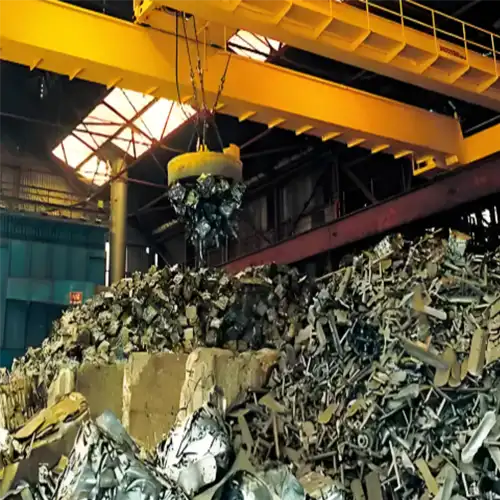
Automatic Double Girder Overhead Cranes with Electromagnetic Chuck
Description: This type features an electromagnetic chuck for lifting ferromagnetic materials, such as steel coils, billets, and scrap metal. The double girder design ensures high stability and lifting capacity, making it ideal for handling heavy loads.
Key Features:
- Heavy-duty lifting capacity
- Electromagnetic chuck for secure material handling
- Automated control for improved precision
- Suitable for both indoor and outdoor operations
Applications:
- Lifting steel coils, billets, and scrap metal
- Used in steel mills, metal warehouses, and similar industries
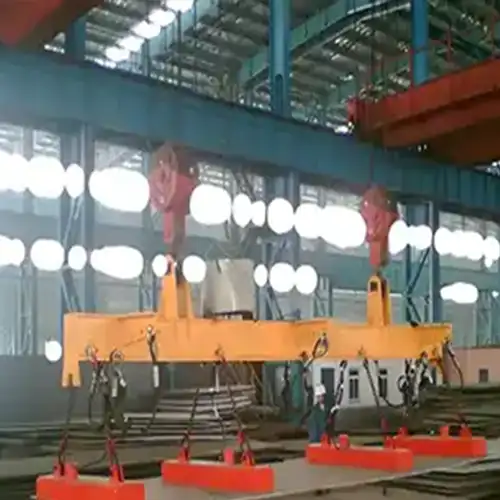
Automatic Double Girder Overhead Cranes with Electromagnetic Beam Spreader
Description: These cranes are equipped with a beam spreader and multiple electromagnets to efficiently handle larger and more complex loads. The beam spreader distributes the weight across several lifting points, reducing the risk of load tipping during transportation.
Key Features:
- Equipped with 2, 3, or more electromagnets for large loads
- Beam spreader ensures even load distribution
- Ideal for handling heavy or large metal pieces like steel slabs
- Improves load stability and prevents shifting
Applications:
- Handling steel plates, slabs, and metal bundles
- Used in steel mills, construction sites, and metal storage facilities
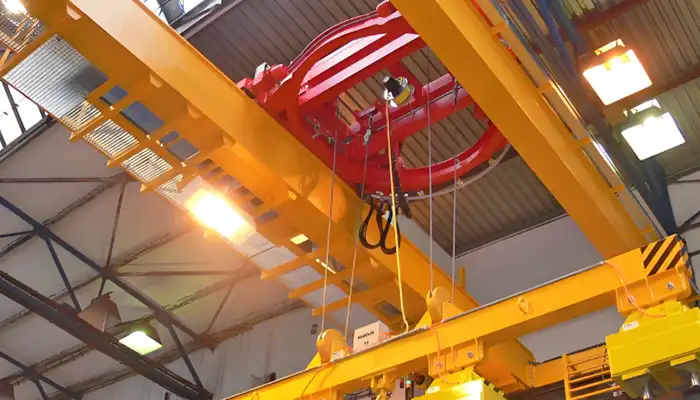
Rotary Systems: Upper Rotating Hoist vs. Lower Rotating Beam Spreader
Upper Rotating Hoist:
- The hoist containing the electromagnets rotates around the crane's main structure, providing flexibility in material positioning. This type is ideal for applications requiring precise control over load placement.
Lower Rotating Beam Spreader:
- The beam spreader rotates beneath the crane, allowing for better control of the load during transport. This configuration is preferred for situations requiring precise horizontal movement of materials.
Upper Rotating Hoist
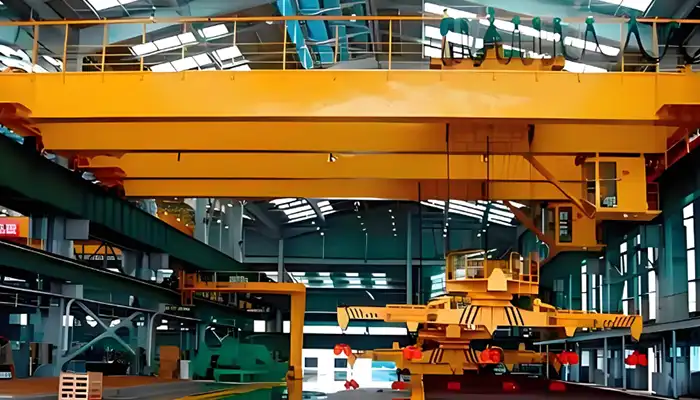
Lower Rotating Beam Spreader
Beam Spreader and Main Girder Positioning: Vertical vs. Parallel Types
Vertical Type:
- In this setup, the beam spreader is positioned vertically relative to the main girder. It is ideal for lifting and lowering materials from a fixed point with minimal horizontal movement, providing stability in confined spaces.
Parallel Type:
- The beam spreader is aligned parallel to the main girder, offering improved horizontal movement. This type is perfect for transporting materials over long distances with precise control and stability.
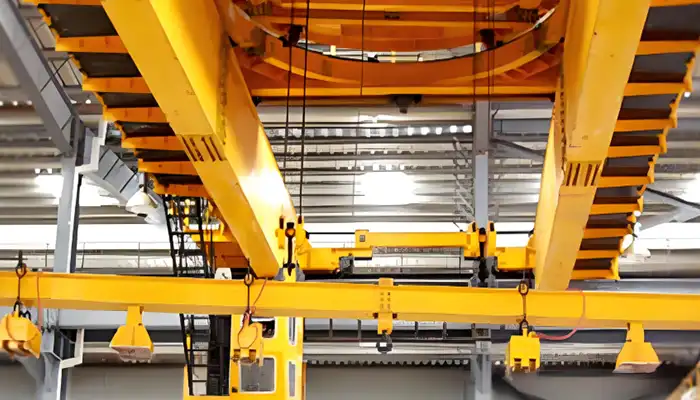
Vertical Type
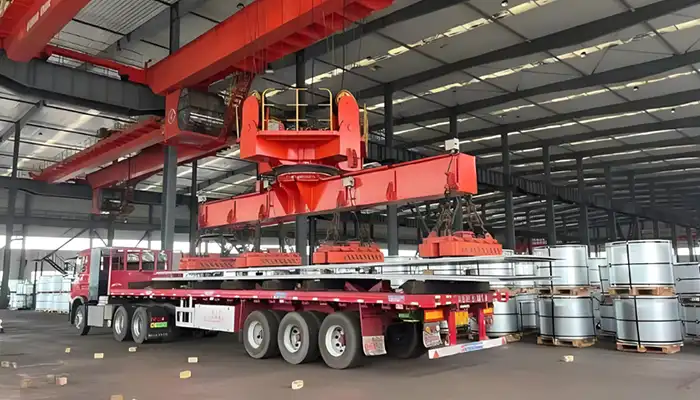
Parallel Type
Each of these automatic overhead cranes with electromagnetic systems is designed to optimize material handling processes in specific industrial settings. Depending on your needs—whether it's high lifting capacity, stability, or flexible control—there's a crane configuration to suit your operation. Choose the one that best fits your material handling requirements to boost efficiency and safety in your workplace.
Typical Applications of Automatic Electromagnetic Overhead Cranes in Metal Handling
Automatic electromagnetic overhead cranes are essential in a variety of metal handling operations. Their ability to lift, move, and position metal products efficiently and safely makes them indispensable in industries like steel mills, scrap yards, and metal workshops. These cranes improve productivity, safety, and precision, making them the go-to choice for metal handling. Let's explore some key applications of automatic overhead cranes with electromagnetic automation.

Why Automatic Electromagnetic Overhead Cranes Are Ideal for Steel Coil Handling
Steel coils are heavy, bulky, and difficult to handle manually, making them perfect for electromagnetic overhead cranes. With automatic electromagnetic lifting technology, these cranes efficiently handle steel coils, offering a secure and reliable way to move them in warehouses.
- Magnetic Grip: The strong electromagnets in these automatic cranes ensure a stable hold on steel coils, preventing them from slipping or falling during transportation.
- Precision Control: The automation in electromagnetic overhead cranes allows for precise placement of coils on storage racks or production lines, reducing handling time and errors.
- Reduced Material Damage: The smooth operation of automatic cranes minimizes the risk of damaging steel coils, a common issue when using traditional lifting methods.
- Increased Productivity: Electromagnetic crane automation allows for faster loading and unloading of coils, improving operational efficiency in steel coil warehouses.

How Automatic Electromagnetic Cranes Manage Scrap Metal Efficiently and Safely
In scrap yards and recycling centers, automatic electromagnetic cranes are used to efficiently and safely manage scrap metal. These cranes are particularly valuable for handling mixed metals and irregular shapes.
- Versatile Lifting: The electromagnetic control system in these cranes ensures that they can lift a wide range of scrap metal types, from small pieces to large, irregular items.
- Efficient Sorting: Automatic cranes can automate the sorting process in scrap metal yards, quickly picking up and placing scrap into designated bins or conveyors, speeding up the recycling process.
- Labor Reduction: With electromagnetic overhead crane automation, the need for manual labor is minimized, allowing workers to focus on more critical tasks.
- Safety Enhancements: Automatic electromagnetic cranes enhance worker safety by reducing the need for direct manual contact with hazardous scrap materials.
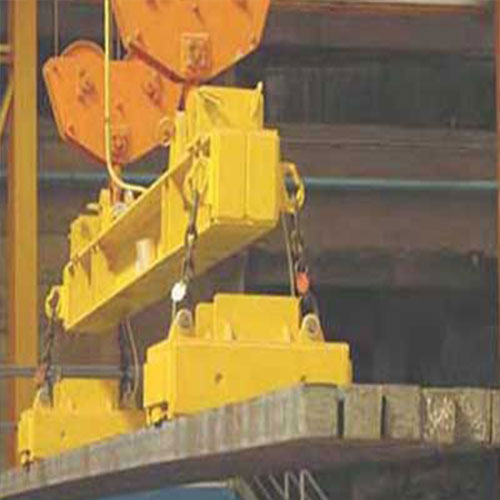
Billet and Beam Handling in Steel Mills
The Role of Automatic Electromagnetic Overhead Cranes in Steel Mill Operations
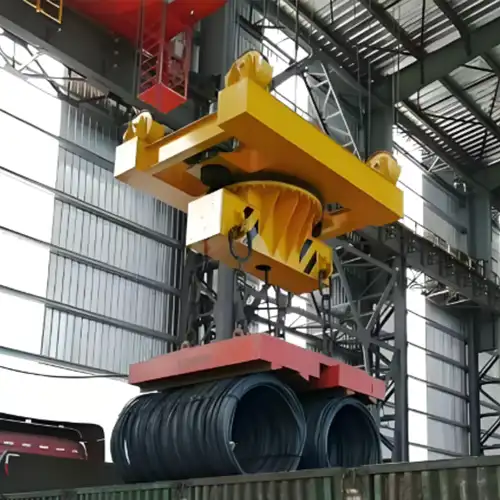
In steel mills, billets, beams, and other heavy metal products must be moved efficiently between production stages. Electromagnetic overhead cranes provide the necessary strength and precision for handling such heavy loads.
- Heavy Lifting: Automatic electromagnetic cranes are capable of lifting and moving billets, beams, and other large metal products with ease, ensuring safe handling even under heavy loads.
- Efficient Material Transport: These electromagnetic overhead cranes facilitate smooth and efficient movement of materials across the steel mill, from storage to production lines.
- Precision Lifting: The advanced electromagnetic crane automation offers precise control over the lifting process, minimizing the risk of accidents or damage to the heavy products.
- Streamlined Production: By automating the lifting and transport process, electromagnetic overhead cranes help steel mills achieve higher productivity with reduced downtime.
General Material Handling in Metal Workshops
Applications Across Different Metal Products and Workshops
In metal workshops, automatic electromagnetic overhead cranes are used for a variety of material handling tasks. These cranes offer flexibility, making them suitable for different metal products and workshop settings.
- Handling Various Metal Products: Whether it's raw metal plates, fabricated parts, or other heavy components, electromagnetic overhead cranes efficiently lift and move them with precision.
- Flexible Applications: Automatic overhead cranes can be adapted to a variety of workshops, from small-scale fabrication shops to large-scale metal production facilities.
- Improved Workflow: The speed and efficiency of electromagnetic crane automation enhance material flow, reducing downtime and improving overall productivity in the workshop.
- Safety and Precision: The smooth operation of automatic electromagnetic overhead cranes ensures that metal materials are handled safely and precisely, reducing the risk of accidents or damage.
Automatic electromagnetic overhead cranes are crucial in the metal handling industry, offering enhanced safety, speed, and precision in tasks like steel coil handling, scrap metal management, billet and beam transport, and general material movement. Their electromagnetic automation allows for fast, secure, and reliable lifting of heavy metal products, increasing productivity and reducing labor costs. Whether in a steel mill, recycling center, or metal workshop, electromagnetic cranes provide an efficient and safe solution for handling metal materials.
What Are Electromagnetic Overhead Cranes with Intelligent or Automatic Control?
Fundamentals of Electromagnetic Lifting Technology
Electromagnetic overhead cranes with intelligent or automatic control are designed to lift and transport ferrous materials, like steel, iron, and other metals, using electromagnetic force. The technology behind these cranes is based on the principle of electromagnetism, where electricity flows through coils to create a magnetic field. This magnetic field is used to attract and hold onto metal objects, making lifting and moving these materials much safer and more efficient.
How It Works:
- Magnetic Field Activation: When the crane is powered on, the electromagnet generates a strong magnetic field.
- Lifting the Load: The magnet attaches to the metal object, allowing the crane to lift it. The load can be moved across the facility by controlling the crane's bridge and trolley systems.
- Deactivating the Magnet: When the crane needs to release the load, the current is turned off, deactivating the magnet and safely dropping the item.
The integration of automatic control makes these cranes even more efficient. Intelligent sensors and automated systems handle the lifting and positioning tasks with minimal human intervention, reducing labor and error.
Components of Electromagnetic Overhead Cranes with Intelligent Control
The main components of an electromagnetic overhead crane with intelligent or automatic control include:
Electromagnets:
- The core element of these cranes, responsible for generating the magnetic field to lift ferrous materials.
- Adjustable strength: The magnet's lifting power can be adjusted based on the material's weight and type, offering flexibility for different handling needs.
Control Systems:
- Automatic Control System: This system automates the crane's operation, adjusting the lifting, lowering, and movement speeds based on real-time conditions. It ensures precise control and reduces the need for manual input.
- Intelligent Sensors: Sensors monitor key parameters like load weight, crane position, and magnet strength, feeding this data to the control system for continuous optimization.
- Remote Operation: In many systems, operators can control the crane remotely, increasing safety and reducing the risk of operator injury.
Lifting Mechanisms:
- Bridge and Trolley Systems: These systems allow the crane to move the load horizontally and vertically across the workshop or warehouse. The control system manages these movements, ensuring smooth and efficient material handling.
- Load Positioning System: Intelligent systems can automatically position the load with high accuracy, reducing the chance of mistakes and improving productivity.
These components work together seamlessly to provide an efficient, automated, and safe lifting process for heavy metal materials.
Key Features of Automatic Electromagnetic Overhead Cranes
Automatic electromagnetic overhead cranes come with a range of advanced features designed to enhance efficiency, improve safety, and provide precision in lifting metal materials. Here are the key features that make these cranes stand out in modern industrial settings.
Automation and Remote Control
Automation is one of the defining features of these cranes, enabling them to perform tasks without constant manual intervention. This results in smoother operations and better control over the crane's movements.
How Automation Enhances Efficiency and Safety:
- Consistent Performance: Automation ensures that the crane operates with high precision, reducing the risk of human error. The system automatically adjusts lifting speeds, positions, and load handling parameters, which helps maintain a consistent workflow.
- Reduced Labor Costs: Automated systems reduce the need for constant manual labor, cutting costs in operations and reducing potential worker injuries in high-risk environments.
- Improved Load Handling: With automated control, the crane ensures smooth and precise handling of heavy or delicate loads, which minimizes the risk of damage to materials.
- Enhanced Safety: Automated systems can detect problems like irregularities in load balance or machinery malfunctions and adjust or stop the crane's operation to avoid accidents.
Remote Monitoring and Control Capabilities:
- Real-Time Monitoring: Remote control systems allow operators to monitor crane performance from a safe distance. Sensors on the crane collect real-time data, which is then displayed on control panels or devices, enabling operators to make informed decisions.
- Increased Flexibility: Operators can control the crane from remote locations, making it easier to manage large facilities or multiple cranes simultaneously.
- Troubleshooting and Maintenance: Remote control systems enable engineers and maintenance teams to troubleshoot issues without needing to be physically present, improving response times and reducing downtime.
Magnetic Control Systems
Electromagnetic cranes use powerful magnets to secure and move metal materials. The integration of magnetic control systems makes these cranes highly efficient for handling various types of metal products.
Benefits of Electromagnetic Control in Lifting Metal Materials:
- Secure Lifting: The electromagnetic system offers a secure grip on metal materials, including steel plates, coils, or scrap metal. This eliminates the need for hooks, slings, or other mechanical lifting methods that may cause damage or instability.
- Precise Control: Operators can precisely control the magnet's power, adjusting it to lift different types of metal without damage. This ensures safe and accurate handling of materials.
- Reduced Risk of Slippage: The electromagnetic force is strong and stable, reducing the chances of slippage or loss of grip, even during motion or when handling materials with irregular shapes.
- Efficiency: Magnetic control systems allow for quick pick-up and release of materials, leading to faster handling times, reduced cycle times, and overall improved productivity.
3D Vision Systems
3D vision systems are becoming increasingly popular in modern automated cranes, enhancing their precision and ability to handle materials accurately.
How 3D Vision Systems Improve Accuracy and Precision:
- Precise Positioning: 3D vision systems provide operators with a detailed, real-time view of the crane's environment. Using depth sensors and cameras, the system can pinpoint the exact location of materials, helping guide the crane's movements accurately.
- Error Reduction: By constantly monitoring the surroundings, the 3D system detects obstacles, misalignments, or incorrect load placements, reducing the chances of errors during lifting and lowering. This ensures safer and more precise handling of materials.
- Automatic Adjustments: 3D vision systems allow cranes to make automatic adjustments to their position and movements based on the real-time data provided by the system. This increases the precision and reduces the need for manual intervention.
- Improved Load Handling: When working with complex or irregularly shaped loads, the 3D system can guide the crane to handle them carefully, reducing damage to both the material and the crane.
Safety Features
Safety is a top priority when it comes to automatic electromagnetic overhead cranes. These cranes come equipped with a variety of advanced safety features to protect both operators and materials.
Anti-Sway Systems:
- Stabilizing Loads: Anti-sway systems are designed to minimize the swinging or swaying of loads during transport. This ensures that the crane can move loads safely, even in challenging environments or with heavy, unbalanced items.
- Improved Stability: Anti-sway technology uses sensors and algorithms to detect and counteract any swinging or shifting in the load, keeping it stable during movement. This is particularly important for handling materials like steel coils or metal plates that can easily swing when not properly balanced.
Overload Protection:
- Prevents Overloading: Overload protection systems are built into the crane's control system, which constantly monitors the load weight during lifting. If the weight exceeds the crane's maximum lifting capacity, the system will either stop the operation or trigger an alarm to warn the operator.
- Extended Crane Life: By preventing overloading, the system reduces the strain on the crane, preventing wear and tear, and extending the crane's lifespan.
- Safety for Operators: This feature ensures that operators are not exposed to unsafe working conditions by preventing the crane from lifting loads beyond its capacity.
Emergency Stop Mechanisms:
- Instant Shutdown: In case of an emergency or unexpected malfunction, the crane's emergency stop mechanism allows operators to halt the crane's operation immediately, preventing further damage or accidents.
- Multiple Fail-Safe Systems: Modern cranes come equipped with multiple fail-safe systems, such as redundant control paths, that ensure the crane can be safely stopped in the event of a system failure.
The key features of automatic electromagnetic overhead cranes—automation, remote control, magnetic control systems, 3D vision systems, and advanced safety mechanisms—make them indispensable for metal handling in modern industrial environments. These features work together to optimize the efficiency, safety, and precision of the crane, making it an ideal solution for industries that require heavy, reliable, and accurate lifting of metal materials.
Benefits of Electromagnetic Lifting Systems in Metal Handling
Electromagnetic lifting systems have revolutionized the way metal materials are handled in industries like steel mills, scrap yards, and metal workshops. With the integration of automatic overhead cranes and electromagnetic technology, these systems offer substantial advantages in terms of efficiency, safety, precision, and cost savings. Let's dive into the key benefits of using electromagnetic lifting systems for metal handling.
Smarter Lifting Solutions
How Automation Leads to Faster and More Efficient Lifting Operations
Automation plays a crucial role in improving the speed and efficiency of lifting operations. Automatic electromagnetic overhead cranes eliminate the need for manual intervention, allowing for faster and more reliable lifting of metal products.
- Speed and Efficiency: The automation of the lifting process enables electromagnetic overhead cranes to move metal materials quickly from one place to another, reducing cycle times and speeding up production.
- Continuous Operation: Unlike manual lifting methods, automated cranes can operate continuously, working around the clock without the need for frequent breaks or downtime.
- Optimal Load Management: Automated electromagnetic cranes can intelligently manage the weight and load balance, optimizing lifting capacity and avoiding overloading.
By automating lifting tasks, electromagnetic systems enhance operational efficiency, which can lead to significant improvements in production rates and throughput.
Safer Operations
Minimizing Human Error, Reducing Risk, and Improving Worker Safety
One of the standout advantages of electromagnetic lifting systems is their contribution to improved safety in metal handling operations. By reducing human involvement in dangerous lifting tasks, the risk of accidents and injuries is minimized.
- Reduced Manual Handling: Automatic cranes reduce the need for workers to physically handle heavy and hazardous materials, lowering the chances of strain, accidents, or mishaps.
- Error Prevention: Electromagnetic overhead cranes are equipped with sophisticated control systems that automatically adjust lifting operations to prevent errors like incorrect load handling or overloading.
- Workplace Safety: With remote control and monitoring capabilities, operators can manage crane operations from a safe distance, reducing their exposure to high-risk environments such as molten metal handling or heavy lifting areas.
These safety enhancements contribute to a safer working environment, ensuring that both workers and equipment remain protected.
Precision and Accuracy
The Role of Precise Magnetic Lifting in Reducing Material Damage
One of the primary benefits of electromagnetic lifting systems is their ability to handle materials with precision and accuracy. This level of control reduces material damage and ensures that metal products are transported smoothly and securely.
- Magnetic Control: Electromagnetic cranes provide a steady, secure grip on metal products, ensuring they are lifted and placed with minimal movement, reducing the risk of accidental damage.
- Accuracy in Positioning: Automatic overhead cranes with electromagnetic systems can place metal materials precisely in their designated locations, which is crucial in manufacturing processes where exact placement is needed for further processing.
- Handling Delicate Materials: For materials like steel coils, billets, or beams, precision lifting prevents deformation or surface scratches, which can affect product quality and value.
By ensuring precise and accurate material handling, electromagnetic systems play a key role in maintaining product integrity and reducing the need for costly rework or waste.
Reduced Operational Costs
Long-term Cost Savings Through Improved Efficiency and Reduced Labor Requirements
One of the most significant benefits of integrating electromagnetic lifting systems into metal handling operations is the potential for cost savings. The automation provided by electromagnetic overhead cranes results in long-term financial benefits.
- Lower Labor Costs: With automated lifting systems, the need for manual labor is reduced, which directly decreases labor costs. Fewer workers are required to operate the crane, and tasks that once required multiple personnel can now be handled by one operator.
- Energy Efficiency: Electromagnetic cranes often feature energy-saving technologies that optimize the use of power, leading to reduced energy consumption and lower operational costs over time.
- Maintenance Savings: Electromagnetic systems generally require less maintenance compared to traditional manual lifting systems. The durability and longevity of automatic overhead cranes reduce the frequency and cost of repairs.
- Reduced Material Waste: The precision and efficiency of electromagnetic cranes minimize the chances of material damage, ensuring that metal products are handled with care and reducing waste that would otherwise result in additional costs.
In the long run, the combination of improved operational efficiency, reduced labor, and lower maintenance requirements makes electromagnetic lifting systems a cost-effective solution for metal handling.
The integration of electromagnetic systems in automatic overhead cranes brings significant advantages to metal handling operations. These systems offer smarter, faster, and safer lifting solutions, improving productivity and reducing risk. Additionally, the precision and accuracy of electromagnetic control reduce material damage, while the long-term cost savings help businesses achieve a strong return on investment. Whether in steel mills, scrap yards, or metal workshops, electromagnetic overhead cranes are an invaluable asset to any metal handling operation.
Comparison with Traditional Lifting Systems( Pendant Control, Wireless Radion Control and Cabin Control )
When choosing a crane system for metal handling, it's essential to understand the differences between traditional manual lifting systems and automatic electromagnetic overhead cranes. Traditional systems, like pendant control, wireless remote control, and cabin control, require operators to manually manage the crane's movements, with varying degrees of flexibility and control. In contrast, automatic electromagnetic cranes use intelligent control systems that automate many of these tasks, offering increased efficiency, precision, and safety.
Control Methods
Control methods significantly impact how a crane operates, how much manual input is needed, and how flexible the system is for different tasks. Traditional systems, such as pendant control and cabin control, keep operators close to the crane and the load, whereas wireless remote control provides more freedom but still depends on manual operation. Electromagnetic cranes with intelligent control, on the other hand, integrate remote and automated operations, allowing for smoother handling of various materials.
- Pendant Control: Requires the operator to be physically close to the crane. This restricts movement and can lead to inefficiencies.
- Wireless Remote Control: Allows the operator to be at a safe distance, offering greater flexibility but still needing manual inputs.
- Cabin Control: Provides good visibility and control, but the operator remains on-site, exposed to potential hazards.
Electromagnetic Cranes with Intelligent Control: These cranes take flexibility a step further with remote operation capabilities and automated adjustments, reducing human intervention and increasing both operational flexibility and precision.
Efficiency and Speed
How fast and smoothly a crane operates can directly impact productivity. While traditional systems require manual operation, which can slow down lifting times, automatic electromagnetic cranes benefit from automated controls that ensure quicker and more efficient material handling.
- Pendant Control: Slower operation since the operator manually controls every movement, making it less efficient.
- Wireless Remote Control: Faster than pendant control but still manual, meaning the operator's reaction time and skill will determine the crane's speed.
- Cabin Control: Generally provides good speed, but manual adjustments still slow the process.
Electromagnetic Cranes with Intelligent Control: AI-assisted control optimizes movements and eliminates the need for manual input, leading to faster lifting and handling, especially when dealing with heavy or cumbersome loads.
Precision and Accuracy
One of the major advantages of electromagnetic cranes with intelligent control is their ability to consistently handle materials with precision. Traditional cranes rely heavily on the operator's skill and experience, which can vary and lead to inconsistencies.
- Pendant Control: Depends entirely on the operator's ability to handle the crane, leading to inconsistent results.
- Wireless Remote Control: Offers better flexibility but still relies on manual control, which impacts precision.
- Cabin Control: Improved precision due to better visibility but still prone to human error.
Electromagnetic Cranes with Intelligent Control: Equipped with advanced sensors and AI-assisted features, these cranes consistently maintain precise control over loads, ensuring accuracy even in complex operations. The electromagnetic systems also offer enhanced grip and handling, ensuring that materials are moved without risk of slippage or damage.
Safety
Safety is a top priority when working with overhead cranes. Traditional cranes, particularly those requiring manual operation, expose operators to various hazards. Electromagnetic cranes with intelligent control minimize this exposure through remote operation and built-in safety features like anti-collision technology and anti-sway systems.
- Pendant Control: Operators are physically near the crane and the load, increasing the likelihood of accidents.
- Wireless Remote Control: Safer since the operator can remain at a distance but still requires manual control.
- Cabin Control: Operator is in a safer location but may still be exposed to risks from malfunctions or other issues.
Electromagnetic Cranes with Intelligent Control: By integrating safety sensors, anti-collision systems, and automatic fault detection, these cranes reduce the likelihood of accidents, keeping operators safer from potential hazards. The remote operation feature allows operators to stay clear of the crane's dangerous zones.
Maintenance
The amount of maintenance required can significantly impact the overall cost and downtime for a crane. Traditional cranes often require frequent inspections and upkeep, whereas electromagnetic cranes are designed with fewer mechanical parts, reducing the need for regular maintenance.
- Pendant Control: Requires regular checks on cables, switches, and mechanical components.
- Wireless Remote Control: Involves upkeep of batteries, remote components, and other hardware.
- Cabin Control: Maintenance of the cabin and control systems is required, which can be costly and time-consuming.
Electromagnetic Cranes with Intelligent Control: These cranes are built to last with fewer moving parts, leading to lower maintenance costs. Moreover, they feature predictive maintenance systems that help detect potential issues early, reducing downtime and unexpected repairs.
Cost
Upfront costs are a critical factor for many crane buyers. Traditional systems tend to have lower initial costs, but over time, the ongoing maintenance and potential downtime can add up. Electromagnetic cranes with intelligent control might have a higher initial cost, but they offer long-term savings in maintenance, efficiency, and safety.
- Pendant Control: Lower upfront costs, but maintenance and labor costs can accumulate over time.
- Wireless Remote Control: Slightly more expensive than pendant control but offers improved flexibility.
- Cabin Control: Higher initial cost due to cabin infrastructure but offers better precision and control.
Electromagnetic Cranes with Intelligent Control: While the initial investment is higher, long-term savings from increased efficiency, lower maintenance costs, and improved safety make these cranes a more cost-effective choice in the long run.
Operational Flexibility
Flexibility in operations is crucial, especially in industries like steel mills or warehouses where tasks can vary greatly from day to day. Traditional cranes limit flexibility by requiring manual adjustments. On the other hand, intelligent electromagnetic cranes offer unmatched flexibility, adapting to different load sizes, types, and handling requirements without the need for manual intervention.
- Pendant Control: Limited flexibility due to proximity requirements and manual control.
- Wireless Remote Control: Provides more flexibility, but still limited by the operator's control.
- Cabin Control: Provides more flexibility compared to pendant control but still requires manual operation.
Electromagnetic Cranes with Intelligent Control: These cranes offer maximum flexibility, as they can automatically adjust settings based on the type of load, the environment, and the task at hand. With automated scheduling, load optimization, and remote operation, these cranes can seamlessly integrate into modern production lines.
When comparing traditional lifting systems with automatic electromagnetic overhead cranes, it's clear that the latter offers several advantages in efficiency, precision, safety, and long-term cost savings. While the initial investment may be higher, the benefits of automated operation, remote control, and advanced safety features make electromagnetic cranes a smart investment for industries like steel handling, warehouses, and manufacturing plants.
Here's a comparison of Traditional Lifting Systems vs Automatic Electromagnetic Overhead Cranes in a table format:
| Feature | Traditional Lifting Systems | Automatic Electromagnetic Overhead Cranes |
|---|---|---|
| Control Methods | - Pendant Control- Wireless Remote Control- Cabin Control | - Intelligent Control- Remote Operation |
| Efficiency and Speed | - Manual operation slows down lifting- Dependent on operator skill | - Automated adjustments for faster lifting- Optimized for heavy loads |
| Precision and Accuracy | - Depends on operator's skill- Inconsistent results | - Consistent, precise handling- AI-assisted control for accurate lifting |
| Safety | - Operator exposure to risks- Manual operation increases accidents | - Remote operation keeps operators safe- Built-in anti-collision and anti-sway systems |
| Maintenance | - Regular inspections and upkeep- Mechanical parts prone to wear | - Fewer moving parts- Predictive maintenance reduces downtime |
| Cost | - Lower initial cost- Higher long-term maintenance and labor costs | - Higher initial cost- Long-term savings in efficiency and maintenance |
| Operational Flexibility | - Limited by manual control- Requires operator proximity to crane | - Maximum flexibility- Automated adjustments based on load and task |
This table summarizes the key differences between traditional lifting systems and automatic electromagnetic cranes, focusing on critical aspects like control, efficiency, safety, and maintenance. It shows how automatic electromagnetic cranes provide superior operational flexibility, precision, and cost savings in the long run.
How Anti-Sway Technology Improves Performance in Metal Handling
Anti-sway technology has become an essential feature in modern electromagnetic overhead cranes. It is specifically designed to tackle the challenges of material instability during lifting, improving the overall performance and safety of metal handling operations. This technology enhances the operation of automatic overhead cranes, ensuring smoother, more efficient movements while reducing the risk of damage to both the materials and the crane system.
Understanding Anti-Sway Technology
The Mechanics Behind Anti-Sway and Its Importance in Crane Operation
Anti-sway technology is used to counteract the swinging or swaying motions of the load during lifting, particularly when lifting heavy or long metal items like steel coils, beams, and scrap metal. This technology uses sensors, control systems, and advanced algorithms to detect and correct the swinging motion in real-time.
- Sensors and Feedback Mechanisms: Anti-sway systems use sensors to detect the load's movement. When the system identifies unwanted swinging, it sends a signal to the crane's control system to counterbalance the movement by adjusting the crane's speed or direction.
- Real-Time Adjustments: By making adjustments in real-time, anti-sway technology helps prevent load instability, keeping the material secure and ensuring smooth, controlled movements.
- Importance for Heavy Loads: When dealing with large and heavy metal items, such as coils or beams, anti-sway becomes especially important as it prevents the load from shifting unexpectedly, which could cause dangerous swings or damage to the materials.
By controlling the sway of the load, anti-sway technology makes crane operations more predictable, stable, and efficient.
Impact on Coil Handling
How Anti-Sway Features Improve Stability and Reduce the Risk of Damage During Lifting
Coil handling is one of the most demanding tasks in metal processing. Steel coils are often heavy, bulky, and prone to damage if not handled properly. Anti-sway technology plays a crucial role in improving stability during the lifting, transport, and placement of steel coils.
- Reduced Coil Damage: Steel coils are sensitive to excessive movement or swinging. Anti-sway technology ensures that the coil is lifted steadily and securely, minimizing the risk of dents, scrapes, or deformations during transport.
- Improved Handling Speed: Since the load remains steady, the crane operator can safely increase the speed of operations without the concern of the load swinging uncontrollably. This leads to faster lifting and unloading times.
- Enhanced Precision: With anti-sway technology, crane operators have better control over coil placement, allowing for precise positioning even in tight or congested spaces.
For steel coil handling, anti-sway systems are essential to maintaining product quality and optimizing operational efficiency in metal workshops or warehouses.
Real-Time Adjustments for Enhanced Control
How Automation and Anti-Sway Systems Work Together to Ensure Smoother Operations
The integration of automation with anti-sway technology elevates the performance of electromagnetic overhead cranes. Automation ensures that the system can respond quickly and accurately to any load instability, making adjustments as needed to maintain smooth, controlled lifting.
- Instant Response: Anti-sway systems, combined with automated control systems, respond instantly to load movements. These systems automatically adjust crane movements to stop the load from swinging before it becomes a problem.
- Continuous Monitoring: With automation, anti-sway technology continuously monitors the load's position and speed, making constant adjustments to maintain stability. This real-time feedback ensures that the crane's operation remains consistent and efficient.
- Operator Support: While automation plays a key role, operators still have the ability to monitor and override the system if necessary. This provides an extra layer of control and ensures that operators can respond to unexpected situations, while the automation handles the typical load movements.
By working in unison, automation and anti-sway technology create a seamless experience that improves the overall performance of electromagnetic cranes in metal handling tasks, enhancing efficiency, safety, and precision.
Anti-sway technology is a game-changer for electromagnetic overhead cranes used in metal handling operations. Its ability to stabilize heavy loads during lifting improves safety, reduces damage to materials like steel coils, and optimizes crane performance. The integration of automation with anti-sway systems ensures smoother, more precise operations that are not only safer but also more efficient. Whether in steel mills, scrap yards, or metal workshops, anti-sway technology is an essential component of modern crane systems, enhancing the productivity and reliability of electromagnetic lifting systems.
The Role of Automation in Reducing Labor and Increasing Productivity
Automation plays a pivotal role in transforming the way cranes operate, especially in metal handling applications. By integrating electromagnetic overhead cranes with automated systems, manufacturers can significantly reduce reliance on manual labor while boosting productivity. This shift results in cost savings, enhanced operational efficiency, and overall smoother operations.
Labor Cost Reduction
How Automating Lifting Tasks Lowers Reliance on Manual Labor
One of the most immediate benefits of automation in electromagnetic cranes is the reduction of labor costs. Manual lifting and handling tasks often require workers to operate cranes, physically position loads, and make real-time adjustments. This process is labor-intensive, requiring skilled operators to manage each movement carefully.
- Reduced Need for Operators: Automation enables cranes to perform most lifting tasks independently, requiring minimal human intervention. With automated systems, the crane can lift, transport, and position materials with little or no direct human control.
- Lower Labor Costs: By automating tasks, businesses can reduce the number of workers needed for crane operation, leading to significant labor savings over time. This also allows employees to focus on other tasks that require human oversight, increasing overall workplace efficiency.
- Fewer Errors and Injuries: Human errors are less likely with automation. Moreover, by reducing manual labor, automation can help minimize the risk of injuries, making the workplace safer for employees.
In industries like steel mills and manufacturing plants, the reduction in manual labor thanks to automation in electromagnetic overhead cranes can result in significant cost savings and a safer working environment.
Increased Productivity
Faster Cycle Times and Reduced Downtime with Automated Cranes
Automated cranes are designed to handle tasks more quickly and efficiently than their manual counterparts. With automation, cranes can execute lifting and transporting tasks in a fraction of the time, leading to increased throughput and minimized downtime.
- Faster Operations: Automated cranes can lift, move, and position materials with higher precision and speed compared to manual operation. This reduces cycle times and accelerates the entire material handling process.
- Continuous Operation: Unlike human-operated cranes, which may need breaks or shift changes, automated cranes can operate continuously, reducing downtime and improving overall productivity.
- Consistent Performance: Automation ensures that the crane performs at a steady, reliable pace throughout the day, maintaining optimal performance even during high-demand periods.
By speeding up processes and maintaining continuous operation, automated overhead cranes contribute to faster material handling, reducing waiting times and increasing output in environments like steel mills, warehouses, and manufacturing plants.
Integration with Other Systems
How Automated Cranes Integrate with Warehouse Management Systems (WMS) and Manufacturing Execution Systems (MES) to Streamline Operations
Automation doesn't just stop at crane operation. Modern electromagnetic overhead cranes are often part of a larger automated ecosystem that integrates seamlessly with other systems in the warehouse or manufacturing environment.
- Warehouse Management Systems (WMS): Automated cranes can be synchronized with a WMS to ensure that materials are moved to the correct locations based on inventory levels, orders, or production schedules. This reduces human errors and ensures that the right materials are always in the right place at the right time.
- Manufacturing Execution Systems (MES): The integration with MES allows automated cranes to respond to specific production requirements. This ensures that materials are moved in line with the production flow, keeping everything in sync and minimizing delays.
- Data Tracking and Reporting: Automation allows real-time data collection on crane performance, material movement, and system status. This data can be analyzed to further optimize crane operations, improve scheduling, and predict maintenance needs.
Integrating automated cranes with WMS and MES results in a more connected, efficient operation. It allows businesses to optimize resources, streamline workflows, and ensure materials are handled according to precise production requirements.
The role of automation in electromagnetic overhead cranes is crucial in reducing labor costs, boosting productivity, and integrating seamlessly with other systems like WMS and MES. By automating lifting tasks, businesses can rely less on manual labor, reduce errors, and improve safety while ensuring continuous, high-speed operations. The ability to integrate automated cranes with existing warehouse and manufacturing systems ensures smoother operations and better coordination across the entire production process. As a result, companies can achieve significant cost savings and enhanced productivity.
When, Why, Where, and How to Choose an Electromagnetic Automated Overhead Crane
Choosing the right electromagnetic automated overhead crane is crucial to improving efficiency, safety, and overall performance in metal handling operations. Whether you're replacing outdated equipment or installing a new system, knowing when, why, where, and how to make the right choice will ensure you maximize your investment. Let's break down each of these critical factors in detail.
When to Choose an Electromagnetic Automated Overhead Crane
You should consider an electromagnetic automated overhead crane when your operations meet specific requirements that this type of crane excels at:
- Heavy Material Handling: If your business deals with lifting heavy, ferrous materials like steel coils, billets, beams, scrap metal, or ingots, an electromagnetic crane is the best option. The crane uses strong electromagnetic fields to safely lift these materials, offering unmatched lifting power.
- Need for Automation: If you're aiming to reduce manual labor and enhance operational efficiency, automated cranes are the way to go. These cranes are perfect for handling repetitive tasks and can significantly cut down on human errors, saving time and costs in the long term.
- High Safety Demands: Automated cranes are essential when operating in high-risk environments, such as steel mills, scrap yards, or hazardous manufacturing settings. The lack of human intervention reduces the risk of accidents, ensuring a safer working environment.
Why Choose an Electromagnetic Automated Overhead Crane
Choosing this crane type comes with significant advantages, especially in terms of operational efficiency, safety, and cost-effectiveness:
- Boosts Operational Efficiency: Electromagnetic automated cranes enhance speed and precision in material handling. The crane operates continuously without the need for breaks, reducing idle time and boosting throughput. This allows you to move more materials in less time, ultimately improving your overall productivity.
- Reduces Labor Costs: With automation, you decrease reliance on manual labor, which not only saves on staffing costs but also reduces the chance for errors, accidents, and delays. The crane can run with minimal human intervention, allowing your workforce to focus on other high-priority tasks.
- Improves Safety: The primary safety benefit of automated cranes is the reduction in human errors. Features like anti-sway systems, overload protection, and emergency stop mechanisms all contribute to preventing accidents. The system ensures that the crane operates within safe limits, keeping workers away from hazardous zones.
- Long-Term Cost Savings: Though the upfront cost of electromagnetic automated cranes may be higher, the long-term savings in reduced labor, maintenance, and downtime can significantly outweigh the initial investment. Additionally, their durability and low operational costs contribute to better ROI over time.
Where to Use Electromagnetic Automated Overhead Cranes
Electromagnetic overhead cranes are designed for specific environments and applications. They excel in:
- Steel Mills: In steel mills, these cranes are perfect for handling molten metal, billets, beams, and finished products. Their ability to safely lift and transport these heavy materials with precision ensures smooth operations in high-demand settings.
- Metal Storage and Warehouses: Electromagnetic cranes are ideal for storage facilities, especially in places where metal products need to be moved, stacked, and stored efficiently. They streamline material handling in warehouses, reducing the time it takes to locate, move, and store metal materials.
- Scrap Metal Yards: For scrap metal handling, electromagnetic cranes provide a high level of reliability and speed. They can lift heavy, jagged scrap metal piles with precision and without the risk of damage, improving both efficiency and safety in scrap yards.
- Manufacturing and Processing Plants: Whether it's handling raw materials, transporting finished goods, or moving parts within a manufacturing process, these cranes are versatile enough to work across different manufacturing environments.
How to Choose the Right Electromagnetic Automated Overhead Crane
Choosing the correct crane involves considering several critical factors. Here's a breakdown of what to focus on:
Load Capacity
Choosing the right crane for your operations means selecting one that can safely handle the materials you'll be lifting. This is determined by both the weight of the metal and the crane's lifting capacity.
- Match the Crane's Capacity to Your Needs: If you're lifting light steel products, a lower-capacity crane may suffice, but if you're handling large billets or steel coils, you'll need a crane with a higher lifting capacity.
- Safety Factor: Ensure the crane has an adequate safety margin above the maximum load you plan to lift, to avoid overloading and potential failures.
Span and Height Requirements
The span of the crane is the distance between the runway rails that the crane travels across. The lifting height is the maximum height the crane can reach to lift materials.
- Span Considerations: Choose a crane that has the span capacity to reach all necessary locations within your facility. The span will depend on the size of your facility and the layout of your operation.
- Height Requirements: For taller workshops or storage areas, ensure the crane can handle the required lifting height to easily lift materials to the desired storage or operational location.
Environmental Considerations
The environment where the crane operates is a crucial factor in the selection process. Factors to think about include:
- Temperature Extremes: If you're operating in an environment with high heat (like steel mills) or cold (like outdoor storage yards), the crane should be equipped with features designed to handle these conditions, such as high-temperature resistance.
- Dust, Dirt, and Moisture: Metal workshops, scrap yards, and processing plants are often exposed to dust and moisture, so choosing a crane with weatherproof or dustproof protection will ensure optimal performance in these environments.
Customization Options
Crane systems can be tailored to fit your unique operational needs. Some features that might need customization include:
- Control Systems: Depending on your preference, choose between wired control, wireless radio control, or automatic control systems.
- Safety Features: Add-ons like anti-sway technology, overload protection, and collision avoidance systems can be integrated to enhance crane performance and safety.
- Lifting Mechanism: Select between single or double girder configurations depending on the specific lifting requirements of your operation.
By taking these factors into account, you'll be well-equipped to choose the right electromagnetic automated overhead crane that perfectly aligns with your metal handling needs, ensuring enhanced safety, efficiency, and long-term cost savings.
Maintenance and Service for Electromagnetic Overhead Cranes
Maintaining your electromagnetic overhead crane is critical to ensuring its long-term reliability, safety, and performance. Regular maintenance and knowing how to address common issues are key to preventing downtime and reducing repair costs. Here's an overview of what you need to know about maintaining and servicing your automated crane system.
Routine Maintenance Needs
Routine maintenance is essential for keeping your electromagnetic overhead crane running smoothly and efficiently. By following a regular maintenance schedule, you can avoid unexpected breakdowns and maximize the lifespan of your equipment. Here are some critical maintenance tasks:
- Inspection of Electromagnetic Systems: Regularly check the electromagnets to ensure they are functioning properly. Inspect the coils for wear and tear, and test the magnet strength to ensure it's lifting materials effectively without any loss in power.
- Lubrication: Ensure that all moving parts such as hoists, wheels, and rails are properly lubricated. Lack of lubrication can lead to increased friction, wear, and eventual failure.
- Brake System Checks: The brake system plays a vital role in crane safety. Check for proper functioning of the brakes regularly to ensure that they engage and release without issues.
- Control System Calibration: Over time, control systems may lose their calibration. Regularly test and calibrate the crane's control systems to ensure precise operation.
- Cleaning: Keep the crane clean by removing any debris or dust that may accumulate in sensitive areas. This is especially important in dusty or dirty environments like steel mills or scrap yards.
Common Repairs and Issues
Electromagnetic overhead cranes, like any machinery, are subject to wear and tear. Knowing what issues to watch out for can help you address problems early before they become costly repairs. Here are some common repairs and issues to be aware of:
- Electromagnet Failure: Electromagnets are the heart of the crane's lifting capability. If the magnet loses power, it can't lift materials properly. Common causes of failure include coil damage, overheating, or power supply issues.
- Worn-out Hoists and Cables: Over time, hoists and cables may become worn or damaged, affecting the crane's lifting ability. Regular inspections can identify these issues early and allow for timely replacement.
- Control System Failures: Issues such as electrical faults or damaged control cables can disrupt the crane's automation and control systems. These problems can result in unresponsive controls or failure to carry out the desired movements.
- Brake Wear: Brakes can wear out over time, especially in high-use environments. Worn brakes may fail to stop the crane safely, presenting a serious safety risk.
- Overload Protection Issues: If the overload protection system malfunctions, it could allow the crane to lift more than its rated capacity, leading to strain on the system and potential damage. Regularly test the overload system to ensure it works properly.
Technological Support
In today's digital age, ongoing support for your electromagnetic overhead crane is more efficient than ever. Many service providers offer technological solutions that can help you maintain and monitor crane performance remotely, reducing downtime and improving operational efficiency. Here are some of the ways technological support can be used:
- Remote Monitoring: Many modern electromagnetic cranes are equipped with remote monitoring capabilities. Service providers can monitor crane performance in real time, detect potential issues, and alert you before a problem becomes critical.
- Predictive Maintenance: Using data analytics and condition monitoring, predictive maintenance systems can forecast when parts are likely to wear out or fail. This allows you to plan repairs or replacements before a failure occurs, reducing downtime and improving reliability.
- Troubleshooting Support: In the event of an issue, many crane service providers offer troubleshooting services to help identify and resolve problems quickly. Whether it's a software glitch, a mechanical fault, or an electromagnetic system issue, technicians can assist remotely or on-site.
- Software Updates and Calibration: Just like any automation system, your crane's software may need occasional updates or calibration. Technological support can help you stay current with the latest advancements, ensuring your crane operates at its peak performance.
By staying on top of routine maintenance, being aware of common issues, and utilizing technological support, you can significantly reduce the risk of unexpected failures and ensure your electromagnetic automated overhead crane performs reliably over time.
Conclusion
Summary of Benefits
Automatic electromagnetic overhead cranes offer a range of advantages that make them a smart investment for industries requiring heavy lifting, especially in metal handling. These cranes provide:
- Increased Efficiency: Automation speeds up lifting operations, reduces downtime, and improves overall workflow.
- Enhanced Safety: Minimizing human involvement reduces the risk of accidents, while advanced safety features like overload protection and anti-sway systems ensure safer operations.
- Precision and Accuracy: The ability to handle heavy metal materials with exact control reduces material damage and ensures smooth operations.
- Cost Savings: While the initial investment may be higher, the long-term savings in labor costs, reduced damage, and improved crane reliability make these cranes a cost-effective choice.
- Advanced Technology Integration: Features like remote monitoring, predictive maintenance, and integration with other automated systems further enhance operational capabilities.
Why Invest in Automatic Electromagnetic Cranes?
Investing in an automatic electromagnetic overhead crane is a forward-thinking decision that can take your operations to the next level. These cranes offer not only superior performance but also a significant competitive edge in industries such as steel mills, metal warehouses, and manufacturing plants.
- Smarter Operations: The integration of automation improves precision and speeds up lifting processes, making your operation more agile and responsive.
- Safer Work Environment: With less human intervention, automation minimizes the chances of errors or accidents, improving workplace safety.
- Long-Term Investment: The reliability and durability of electromagnetic cranes, coupled with their ability to handle challenging metal products, ensure that your investment will pay off over the long term.
For crane buyers, making the switch to smarter, automated lifting solutions is an investment in both operational efficiency and safety. The benefits of reduced labor costs, increased precision, and better safety standards make electromagnetic overhead cranes an ideal choice for the modern metal handling industry.

Yuantai Cranes
Overhead Crane Manufacturer with CE, ISO, SGS, CNEX Certificates.
- Main Specifications - Capacity: 0.5–550 tons | Span: up to 40m | Speed: 0.8–12 m/min | Duty: A3–A7 | Power: 380–690V, 50/60Hz | Control: pendant/remote/cabin
- Full engineering: FEA/PLC/VFD + in-house build + global delivery + on-site support, for workshops, factories, EPC contractors, industrial projects, etc.
- Support: design, manufacturing, testing, service – end-to-end, customized lifting solutions worldwide.
How to Get an Accurate Crane Price for Your Application?
Tips: Copy the spec list, fill in your details, and paste it into the form on the right/ down-below for a quick price.
- Crane type:_____ . (e.g., overhead crane, gantry crane, jib crane)
- Max weight to lift:_____ tons. (e.g., 2t, 5t, 10t, 20t, 50t)
- Lifting height:_____ m. (How high does the hook need to reach?
- Workshop width (span):_____ m . (Distance between the two crane rails)
- Travel distance:_____ m . (How long does the crane need to move along the runway?)
- Control type:_____. (Pendant / remote / cabin Control)
- Power supply:_____. (Local voltage & frequency – e.g., 380V, 50Hz, 3-phase)
- What will it be used for?_____ (e.g., steel fabrication, concrete products, mold handling, general manufacturing, etc.)
- Any special requirements?_____ (e.g., extreme temperature, dusty or explosive environment, special paint color, etc.)
Just leave a message via the contact form and our hoist and crane engineer will contact you with in 24working hours.
Get Your Custom Quote–Quick & Easy
Fill in what you know. Skip what you don't – we'll help.Any question will be reply with 24 working hours